
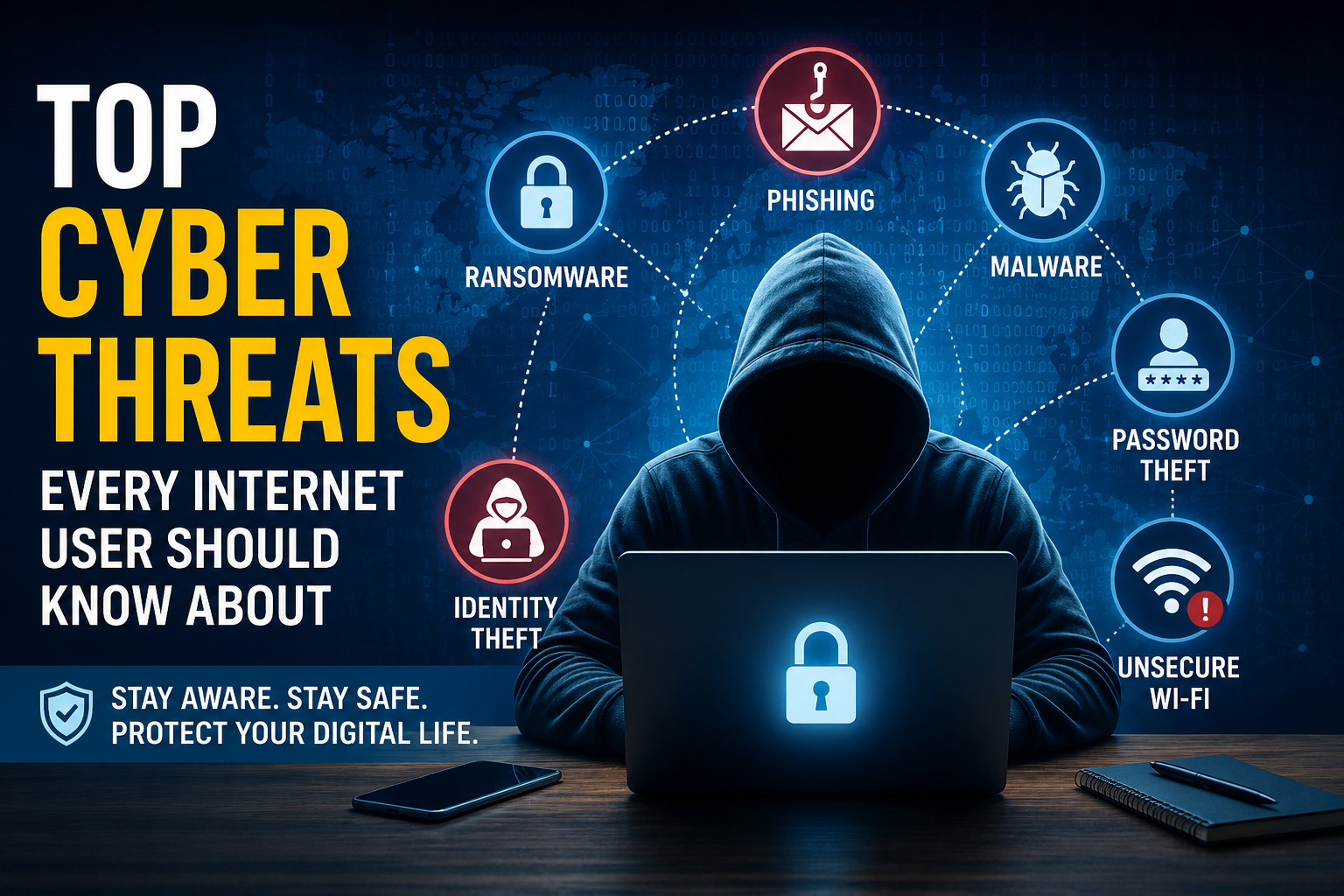
Top Cyber Threats Every Internet User Should Know About
Ever Feel Like the Internet Is Getting Less Safe?
A few years ago, most people worried about getting a virus from a suspicious download. Things were simpler back then.
Today? Not so much.
You can be scrolling social media, checking email, shopping online, or paying a bill and still end up becoming a target. That’s what makes top cyber threats so concerning. They don’t always look dangerous. In fact, many attacks are designed to look completely normal.
Whether you’re a student, a parent, a business owner, or someone who simply uses the internet every day, understanding these risks can save you a lot of trouble later.
Let’s look at the threats that are causing the most damage right now.
1. Phishing Attacks Still Fool Millions
Most people think they’d never fall for a fake email.
The truth is, attackers have gotten really good at making scams look legitimate.
A phishing email might appear to come from your bank, your employer, or even a delivery company. One click on the wrong link can expose passwords, payment details, or personal information.
That’s why phishing remains one of the most common cyber threats for internet users today.
2. Ransomware Is No Longer Just a Business Problem
There was a time when ransomware mainly targeted large organizations.
Not anymore.
Home users are getting hit too. Attackers lock files and demand payment to restore access. Sometimes family photos, important documents, or years of work become inaccessible within minutes.
Honestly, few things are more frustrating than losing data you thought was safe.
3. Password Theft Is Everywhere
People reuse passwords. We all know it happens.
Hackers know it too.
When one website suffers a breach, attackers often test those same login details across dozens of other services. A leaked password from an old account can suddenly expose your email, banking apps, or cloud storage.
That’s where most people get it wrong. They focus on creating strong passwords but forget about using different ones.
4. Malware Hidden in Everyday Downloads
Malware isn’t always obvious.
Sometimes it’s bundled with free software. Other times it hides inside browser extensions or fake application updates.
Many of the common cybersecurity threats 2025 reports highlighted involved malware that quietly collected user information without triggering any obvious warning signs.
And that’s exactly what makes it dangerous.
5. Public Wi-Fi Risks
Free Wi-Fi sounds convenient.
But unsecured networks can expose personal information if users aren’t careful. Cybercriminals often exploit weak networks to intercept data or redirect users to malicious websites.
A coffee shop internet connection should never be treated as completely safe.
Quick Comparison of Common Threats
| Threat Type | Main Risk | Typical Target |
|---|---|---|
| Phishing | Stolen credentials | Everyone |
| Ransomware | Locked files | Individuals & businesses |
| Malware | Data theft | PC and laptop users |
| Password Theft | Account compromise | Online users |
| Public Wi-Fi Attacks | Privacy exposure | Travelers & remote workers |
Why These Threats Keep Growing
The internet has become a bigger part of daily life.
More online accounts. More devices. More data.
Naturally, criminals follow opportunities.
Many modern cybercrime types rely less on technical hacking and more on manipulating people. That’s why awareness remains one of the strongest defenses available.
Expert Insight
“Most successful attacks I’ve seen weren’t caused by advanced hacking. They started with a simple click, a reused password, or a moment of distraction.”
That may sound simple, but it’s surprisingly accurate.
How to Reduce Your Risk
You don’t need to become a cybersecurity expert.
A few habits can make a huge difference:
- Use unique passwords
- Enable two-factor authentication
- Keep software updated
- Avoid suspicious links
- Back up important files regularly
- Use trusted security software
Small steps. Big impact.
Frequently Asked Questions
What are the biggest cyber threats today?
Phishing, ransomware, malware, password theft, and public Wi-Fi attacks remain among the biggest risks.
Are home users targeted by cybercriminals?
Yes. Many attackers specifically target individuals because they often have weaker security.
What is the most common type of cyber attack?
Phishing continues to be one of the most successful and widespread attack methods.
Can antivirus software stop all cyber threats?
No. Security software helps, but safe online behavior is equally important.
Why are password breaches so dangerous?
One compromised password can lead to multiple account takeovers if reused elsewhere.
Is public Wi-Fi unsafe?
Not always, but unsecured networks can expose users to additional risks.
Final Thoughts
The digital world offers incredible convenience, but it also comes with risks that are easy to overlook.
The good news is that most top cyber threats can be avoided with awareness, good security habits, and a little caution. You don’t need to be paranoid. You just need to stay informed.
Start with the basics, pay attention to warning signs, and treat online security as something worth maintaining—not something to think about after a problem appears.
Source : https://sirenasultana.com/blogs/3713/Why-Total-Security-Software-Is-Essential-for-Every-PC-User