
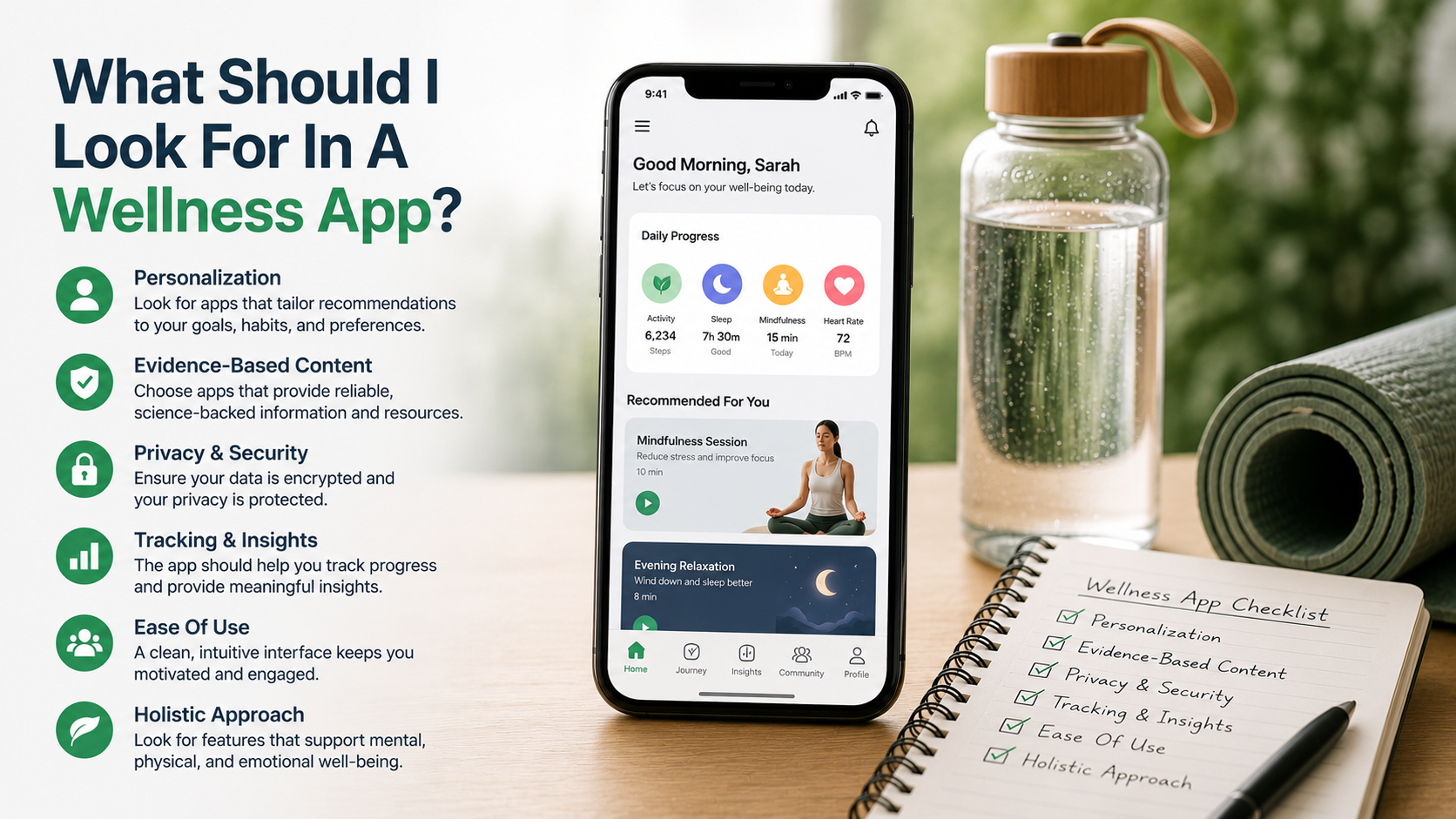
What Should I Look For In A Wellness App?
Not long ago, wellness apps were mostly step counters and calorie trackers. Now they cover almost everything: meditation, sleep improvement, stress management, hydration, nutrition, fitness, and even virtual health coaching.
The problem is that there are thousands of options, and many of them promise the same thing. Better sleep. Better habits. Better health.
Some genuinely help. Others become another forgotten icon on your phone after a week.
This growing demand has encouraged many businesses to work with a healthcare app development company to create digital wellness platforms that fit modern lifestyles. But from a user’s perspective, the important question is much simpler:
What actually makes a wellness app worth using?
The answer has less to do with flashy features and more to do with whether the app fits naturally into everyday life.
A Good Wellness App Should Solve One Clear Problem
A common mistake many apps make is trying to do everything.
- Sleep tracking.
- Meal planning.
- Workout coaching.
- Mental health support.
- Habit building.
- Journaling.
Putting every wellness feature into one application often creates confusion instead of value.
The strongest wellness apps usually begin with a single purpose and do that one thing exceptionally well.
Ask yourself:
- Do I want to improve my sleep?
- Am I trying to reduce stress?
- Do I need help building healthier habits?
- Am I looking for nutrition guidance?
Knowing your own goal makes choosing the right app much easier.
Simple Onboarding Matters More Than People Think
Most users decide whether they like an app within the first few minutes.
If the setup process feels like filling out tax forms, many simply close it.
Good onboarding should collect only the information it actually needs, such as:
- Age range
- Wellness goals
- Activity level
- Preferred routines
The app can learn the rest over time.
Some of the most successful platforms focus on gradual personalization instead of asking twenty questions before users even reach the home screen.
Progress Tracking Should Feel Encouraging
People enjoy seeing progress.
What they don’t enjoy is staring at complicated dashboards filled with numbers they don’t understand.
A useful wellness app helps users notice small improvements:
- Better sleep consistency
- Daily meditation streaks
- Water intake goals
- Weekly exercise habits
- Mood tracking patterns
Apps like Headspace gained popularity partly because progress feels visible without overwhelming users with data.
Small wins keep people engaged.
Personalization Makes A Big Difference
No two users have the same lifestyle.
Someone working night shifts has different wellness needs than someone following a traditional office schedule.
The better apps adapt to individual habits rather than forcing everyone into the same routine.
Useful personalization might include:
- Adjustable reminder times
- Flexible wellness plans
- Custom daily goals
- Adaptive recommendations
An app should feel like it’s learning alongside the user, not constantly asking them to adjust.
Reliable Health Information Is Essential
Wellness content is everywhere online.
Not all of it is accurate.
A trustworthy app should rely on evidence-based information rather than trends that change every few months.
Users should look for content developed with input from professionals, especially when the app covers:
- Nutrition
- Mental wellness
- Sleep improvement
- Preventive health
- Chronic condition management
Advice that sounds too perfect usually deserves a second look.
Integration With Wearable Devices
Many people already use smartwatches or fitness bands.
A good wellness app should work with those devices instead of making users enter everything manually.
Useful integrations include:
- Step tracking
- Heart rate monitoring
- Sleep analysis
- Activity logging
Platforms like Apple Health and Google Fit have become popular partly because they collect information from multiple sources into one place.
The less manual work required, the more likely users are to stay consistent.
Notifications Should Be Helpful, Not Annoying
There’s a fine line between motivation and interruption.
A reminder to drink water can be useful.
Ten reminders in a single afternoon usually aren’t.
The best wellness apps allow users to control:
- Frequency
- Timing
- Notification types
- Quiet hours
People should feel supported, not chased.
Privacy And Data Security Should Never Be Ignored
Wellness apps often collect sensitive information.
- Sleep habits.
- Mental health journals.
- Medical history.
- Activity patterns.
Users should understand how their information is stored and whether it is shared with third parties.
A clear privacy policy and secure account protection are basic expectations today.
Trust is difficult to earn and very easy to lose.
Community Features Can Help, But They’re Not Essential
Some users enjoy sharing progress.
Others prefer keeping their wellness journey private.
Community tools might include:
- Group challenges
- Accountability partners
- Discussion boards
- Shared milestones
Apps like Strava built strong communities around activity sharing, but that model doesn’t work for everyone.
The important thing is choice.
Social interaction should feel optional, not mandatory.
Offline Access Is Surprisingly Useful
Many people exercise outdoors, travel frequently, or have unreliable internet connections.
Offline functionality allows users to:
- Access guided sessions
- View saved plans
- Log activities
- Review progress
It’s a small feature that often improves the overall experience.
Avoid Apps That Promise Instant Results
Wellness is gradual.
Any app promising dramatic transformations in a few days should probably be viewed with caution.
Healthy habits take time to build.
The best apps encourage consistency instead of chasing quick fixes.
Ironically, the less dramatic the promises, the more trustworthy the platform often feels.
Why Businesses Focus So Much On User Experience
From a product perspective, wellness apps are more than collections of features.
Developers have to think about:
- Retention
- User engagement
- Personalization
- Security
- Scalability
Those decisions influence both usability and long-term maintenance. They also play a role in overall healthcare app development cost, since advanced personalization, wearable integrations, and secure data management require additional technical investment.
The experience users see on the screen is usually the result of hundreds of small design decisions happening behind the scenes.
Final Thoughts
A good wellness app doesn’t try to replace doctors, therapists, or healthy habits. It supports them.
Look for an app that solves a clear problem, respects your privacy, fits naturally into your routine, and encourages consistency without becoming overwhelming.
The best wellness platforms rarely feel complicated.
They simply make it a little easier to take care of yourself every day, and over time, those small actions tend to matter more than any single feature.