
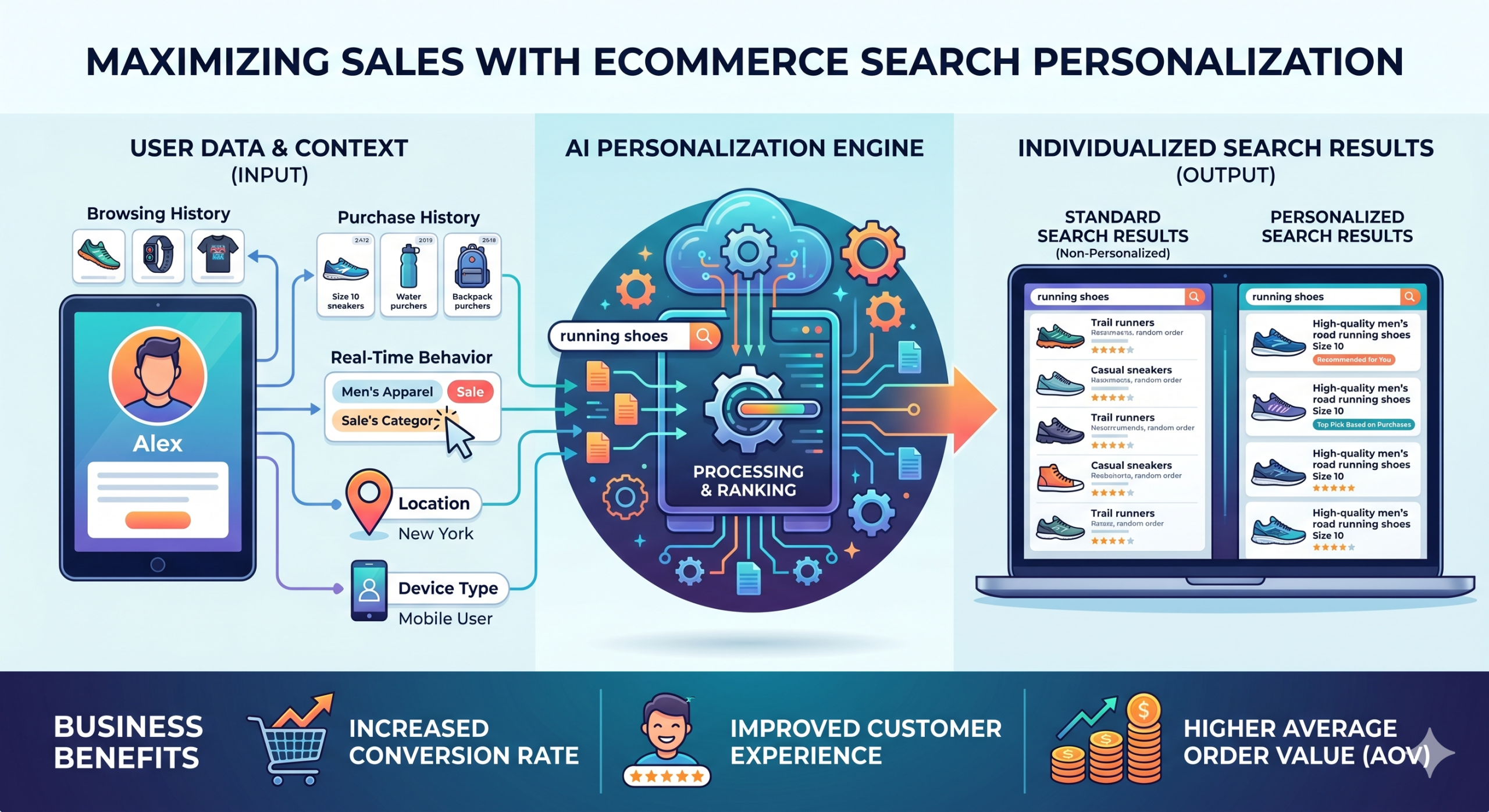
Ecommerce Personalization for Category-Led Merchandising Strategies
In today’s highly competitive digital commerce environment, retailers are under increasing pressure to deliver shopping experiences that are both relevant and engaging. While product-level personalization often receives significant attention, category pages remain one of the most influential areas of the customer journey. These pages frequently serve as the bridge between product discovery and purchase decisions, making them a critical component of ecommerce success.
For many retailers, category pages generate a significant portion of website traffic and revenue. Customers often begin their shopping journeys by browsing categories such as apparel, electronics, beauty, home furnishings, or sporting goods before narrowing their choices. However, many category pages still rely on static merchandising approaches that display the same products and content to every visitor.
As customer expectations continue to rise, retailers are increasingly adopting category-led merchandising strategies powered by ecommerce personalization. By combining customer data, behavioral insights, artificial intelligence, and real-time decisioning, businesses can create category experiences that adapt to individual shopper preferences and intent.
This approach enables retailers to transform category pages from static product listings into dynamic discovery environments that improve engagement, conversion rates, and revenue performance.
Understanding Category-Led Merchandising
Category-led merchandising is the practice of organizing, presenting, and optimizing product categories to improve product discovery and drive sales.
The objective is to help customers navigate large product assortments more efficiently while highlighting products that align with business goals and customer interests.
Category merchandising typically involves:
- Product placement
- Category sorting
- Featured collections
- Promotional banners
- Product recommendations
- Navigation structures
Effective category merchandising helps customers find relevant products more quickly.
Why Category Pages Matter in Ecommerce
Category pages often serve as key decision-making environments.
Customers use them to:
- Explore product assortments
- Compare options
- Discover new products
- Refine purchase decisions
For many retailers, category pages receive more traffic than individual product pages.
Because of their influence on product discovery, category pages can significantly impact:
- Conversion rates
- Average order value
- Customer engagement
- Revenue generation
Optimizing category experiences is therefore a major opportunity for growth.
The Limitations of Traditional Category Merchandising
Historically, category merchandising relied on static rules.
Examples include:
- Best-selling products first
- New arrivals first
- Manual merchandising decisions
- Fixed promotional placements
While these approaches provide consistency, they often fail to account for individual customer preferences.
Common challenges include:
Generic Experiences
All customers see the same category presentation.
Limited Relevance
Products may not align with shopper interests.
Missed Discovery Opportunities
Relevant products can remain buried within large assortments.
Lower Engagement
Customers may struggle to find products that meet their needs.
These limitations create opportunities for personalization.
What Is Ecommerce Personalization?
Ecommerce personalization involves adapting digital shopping experiences based on customer data, behavior, preferences, and context.
Personalization can influence:
- Product recommendations
- Search results
- Promotional content
- Navigation experiences
- Category merchandising
The goal is to create more relevant and individualized shopping journeys.
Why Ecommerce Personalization Enhances Category-Led Merchandising
Category pages often contain hundreds or thousands of products.
Without personalization, customers may need to spend significant time searching for relevant items.
Ecommerce personalization improves category experiences by:
- Prioritizing relevant products
- Adapting content dynamically
- Supporting product discovery
- Reducing decision fatigue
This creates a more efficient and engaging shopping experience.
How Ecommerce Personalization Supports Category-Led Merchandising Strategies
Personalizing Product Rankings
Product ranking is one of the most impactful merchandising decisions.
Traditional category pages often rank products using static criteria.
Personalized category experiences can prioritize products based on:
- Browsing behavior
- Purchase history
- Product affinity
- Customer preferences
Different shoppers may see different product rankings within the same category.
This improves relevance significantly.
Leveraging Customer Affinity
Customer affinity refers to demonstrated interest in specific products, brands, or categories.
Ecommerce personalization uses affinity data to highlight products most likely to resonate with individual shoppers.
For example:
A customer who frequently purchases premium brands may see different category rankings than a value-focused shopper.
Affinity-driven merchandising improves engagement and conversion potential.
Adapting to Real-Time Customer Intent
Customer interests can change rapidly.
A shopper exploring outdoor furniture today may have different needs than they did last week.
Personalization systems analyze real-time signals such as:
- Product views
- Search activity
- Category browsing
- Cart additions
These signals help category pages adapt dynamically to current intent.
Improving Product Discovery
Large product catalogs often create discovery challenges.
Customers may struggle to find relevant products among hundreds of options.
Personalized category merchandising helps surface:
- Relevant products
- Trending items
- Preferred brands
- Complementary collections
This accelerates product discovery and improves customer satisfaction.
Supporting Cross-Sell Opportunities
Category pages provide valuable opportunities to introduce customers to related products.
Personalization helps identify complementary categories and products based on:
- Purchase history
- Behavioral patterns
- Customer preferences
Cross-category discovery often increases both engagement and average order value.
Enhancing Promotional Relevance
Promotional content performs best when it aligns with customer interests.
Ecommerce personalization enables category pages to display:
- Personalized banners
- Relevant offers
- Category-specific promotions
- Customer-specific incentives
This improves promotional effectiveness while maintaining a consistent shopping experience.
AI-Powered Merchandising Optimization
Artificial intelligence is transforming category merchandising.
AI-powered systems can:
- Analyze customer behavior
- Predict product relevance
- Optimize product rankings
- Personalize category experiences
- Adapt merchandising strategies in real time
Machine learning continuously improves performance as more customer interactions occur.
This enables highly scalable personalization.
Dynamic Category Experiences
Modern personalization platforms allow category pages to evolve dynamically.
Elements that can be personalized include:
- Product ordering
- Featured products
- Promotional content
- Recommendations
- Navigation options
Dynamic category experiences improve relevance without requiring manual merchandising adjustments.
The Role of Customer Data Platforms
Customer Data Platforms (CDPs) provide the foundation for personalized merchandising.
A CDP helps unify customer information from:
- Ecommerce platforms
- Mobile applications
- Loyalty programs
- CRM systems
- Marketing channels
Unified customer profiles improve personalization accuracy and merchandising effectiveness.
The richer the customer profile, the more relevant category experiences become.
Supporting Omnichannel Merchandising Strategies
Customers interact with brands across multiple channels.
Examples include:
- Ecommerce websites
- Mobile applications
- Email campaigns
- Loyalty programs
- Physical stores
Personalized category merchandising can leverage information from these interactions to create more consistent experiences.
This supports omnichannel customer engagement.
Benefits of Ecommerce Personalization for Category Merchandising
Improved Product Discovery
Customers find relevant products more efficiently.
Higher Conversion Rates
Relevant assortments support purchase decisions.
Increased Customer Engagement
Personalized experiences encourage interaction.
Better Customer Satisfaction
Customers encounter products aligned with their interests.
Higher Average Order Value
Cross-sell opportunities become more effective.
Stronger Revenue Performance
Relevant merchandising drives business growth.
Common Challenges Retailers Face
Large Product Assortments
Managing relevance across extensive catalogs can be complex.
Data Silos
Disconnected systems reduce personalization effectiveness.
Real-Time Processing Requirements
Dynamic merchandising requires timely data activation.
Balancing Personalization and Business Objectives
Merchandising strategies must support both customer and organizational goals.
Addressing these challenges is critical for success.
Best Practices for Personalized Category Merchandising
Prioritize Customer Intent
Current behavior often provides the strongest relevance signals.
Leverage AI-Powered Merchandising
Machine learning improves scalability and performance.
Use Affinity-Based Product Ranking
Customer preferences should influence category presentation.
Continuously Optimize Experiences
Category performance should be monitored and refined regularly.
Connect Customer Data Across Channels
Unified intelligence improves personalization outcomes.
Key Metrics to Track
Retailers should monitor:
- Category page conversion rates
- Product discovery metrics
- Click-through rates
- Average order value
- Revenue per visitor
- Engagement rates
- Personalized merchandising performance
These metrics help measure effectiveness and guide optimization efforts.
Conclusion
Category pages play a critical role in ecommerce product discovery and purchasing decisions. However, traditional merchandising approaches often struggle to meet modern customer expectations because they present the same experience to every visitor regardless of individual preferences or intent.
Ecommerce personalization transforms category-led merchandising by dynamically adapting product rankings, promotional content, recommendations, and discovery experiences based on customer behavior and real-time context. Through artificial intelligence, unified customer intelligence, and predictive analytics, retailers can create category experiences that are more relevant and effective.
As digital commerce continues to evolve, retailers that invest in personalized category merchandising strategies will be better positioned to improve product discovery, increase conversions, strengthen customer engagement, and drive sustainable revenue growth.