
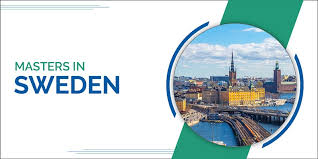
How to Apply for a Master’s Degree in Sweden?
Quick answer: Applying for a master’s degree in Sweden involves six key steps: researching programs, checking eligibility, preparing documents, submitting your application through universityadmissions.se, applying for a student visa, and arranging housing. Most programs are taught in English and are free for EU students, though non-EU students pay tuition fees.
Sweden consistently ranks among the world’s top destinations for international students. With world-class universities, a strong emphasis on research and innovation, and a high quality of life, it’s easy to see why thousands of students from around the globe choose Sweden each year.
But knowing where you want to study and knowing how to get there are two different things. The application process can feel overwhelming at first—especially if you’re navigating it from another country. The good news? It’s more straightforward than it looks, once you break it down.
This guide walks you through six clear steps to apply for a master’s degree in Sweden, with helpful tips for international applicants along the way.
Why Study in Sweden? Key Reasons to Consider It
Before diving into the process, it’s worth understanding what makes Sweden stand out.
Sweden is home to several globally ranked universities, including Lund University, Uppsala University, KTH Royal Institute of Technology, and Stockholm University. Swedish universities place a strong emphasis on critical thinking, collaboration, and sustainability—values that are woven into both the curriculum and campus culture.
A large number of master’s programs are taught entirely in English, which makes Sweden accessible to students from across the world. Additionally, Swedish universities follow the Bologna Process, meaning your degree will be recognized across Europe and in many countries worldwide.
For students coming from EU/EEA countries, tuition at Swedish public universities is free. Non-EU students pay tuition fees, but there are generous scholarships available—including the Swedish Institute Scholarship, which covers tuition, living expenses, and travel costs.
Can You Study in Sweden from Pakistan, and Other Non-EU Countries?
Yes, absolutely. Sweden welcomes students from non-EU countries, including Pakistan, India, Nigeria, the US, and beyond. Each year, thousands of students choose to Study in Sweden from Pakistan and successfully enroll in Swedish universities.
That said, non-EU applicants do face a few additional steps compared to EU students, particularly around visa requirements and tuition fees. Here’s what’s important to know upfront:
- Tuition fees apply to non-EU/EEA students. Fees vary by program but typically range from SEK 80,000 to SEK 295,000 per year (approximately $7,500–$28,000 USD).
- A student visa (residence permit) is required for stays longer than 90 days. This is handled through the Swedish Migration Agency (Migrationsverket).
- Scholarships are available specifically for students from developing countries. The Swedish Institute Scholarship for Global Professionals (SISGP) is one of the most competitive and prestigious options.
Now, let’s get into the steps.
Step 1: Research Programs and Universities
Start by identifying programs that align with your academic background and career goals. The official portal universityadmissions.se lists all master’s programs at Swedish universities open to international applicants.
You can filter by subject area, language of instruction, university, and application deadline. Most master’s programs in Sweden are two years (120 ECTS credits), though some one-year programs (60 ECTS) also exist.
Helpful tip: Check each program’s specific entry requirements early. Some programs require a background in a particular field, a minimum GPA, or proof of work experience.
LSI keywords to note for your research: Swedish university admissions, master’s programs in English, top universities in Sweden, postgraduate study abroad, international student Sweden.
Step 2: Check Your Eligibility
Each university and program has its own eligibility criteria, but most Swedish master’s programs require:
- A bachelor’s degree (or equivalent) in a relevant field
- English language proficiency, typically demonstrated through IELTS (minimum 6.5 overall) or TOEFL iBT (minimum 90)
- Some programs require GMAT or GRE scores, particularly in business or engineering
- A minimum GPA, which varies by program
For students from Pakistan and other countries with different grading systems, universityadmissions.se provides a country-specific guide to help you understand how your qualifications are evaluated in the Swedish system.
Step 3: Gather Your Application Documents
Once you’ve confirmed your eligibility, start collecting your documents well in advance. Typical requirements include:
- Official transcripts from all previous universities
- A copy of your bachelor’s degree certificate
- Proof of English proficiency (IELTS/TOEFL score report)
- A statement of purpose or personal letter (required by most programs)
- Letters of recommendation (usually two academic or professional references)
- A CV or résumé
- Passport copy (for international applicants)
Helpful tip: Get your documents certified and translated into English if they are in another language. Some universities require notarized copies, so check individual program requirements carefully.
Step 4: Submit Your Application via universityadmissions.se
All applications to Swedish universities are submitted through the centralized portal universityadmissions.se—not directly to individual universities.
Here’s how the process works:
- Create an account on universityadmissions.se
- Search for and select up to four programs (ranked in order of preference)
- Pay the application fee of SEK 900 (approximately $85 USD)—note that EU/EEA students and Swedish citizens are exempt from this fee
- Upload your supporting documents before the document deadline
Application deadlines for the autumn semester (which starts in late August) are typically:
- Application open: Mid-October
- Application deadline: January 15
- Document deadline: February 1
Missing these deadlines means waiting until the next intake, so mark them on your calendar early.
Step 5: Apply for a Student Residence Permit
Once you receive an admission offer, non-EU students must apply for a student residence permit through the Swedish Migration Agency (Migrationsverket). EU/EEA students do not need a visa to study in Sweden.
To apply, you’ll need:
- A confirmed letter of admission
- Proof of financial means (you must demonstrate you can support yourself—approximately SEK 8,514 per month during your studies)
- Proof of health insurance (if applicable)
- A valid passport
Apply as early as possible. Processing times can take 1–4 months, and you cannot enter Sweden on a student visa until your permit is approved.
Step 6: Arrange Housing and Prepare for Arrival
Housing in Swedish university cities—particularly Stockholm, Gothenburg, and Malmö—can be competitive and expensive. Start your search early.
Most universities offer student housing through their own housing offices or affiliated student unions. Apply for on-campus or university-affiliated housing as soon as you receive your admission offer, as waitlists can be long.
Average monthly rent for a student room ranges from SEK 3,000 to SEK 6,000 ($280–$570 USD), depending on the city and type of accommodation.
Before you arrive, also make sure to:
- Register with the Swedish Tax Agency (Skatteverket) to get a personal identity number (personnummer)—this is essential for accessing most Swedish services
- Open a Swedish bank account once you arrive
- Connect with your university’s international student office for orientation support
Final Words
Applying for a master’s degree in Sweden takes planning, but the process is well-organized and manageable when you take it one step at a time. Research early, meet your deadlines, and don’t underestimate the importance of a strong personal statement—it can genuinely make a difference in competitive programs.
For students from Pakistan and other non-EU countries, the additional visa and financial documentation steps add some complexity, but they are absolutely achievable with the right preparation. Thousands of students from around the world successfully navigate this process every year.
Sweden offers a unique blend of academic excellence, English-taught programs, and an open, innovative culture. If you’ve been thinking about applying, there’s no better time to start.
Frequently Asked Questions
Is it free to study in Sweden as an international student?
Tuition is free for EU/EEA citizens at Swedish public universities. Students from outside the EU/EEA pay tuition fees, which vary by program and university. However, several scholarships—including the Swedish Institute Scholarship—are available to help offset costs.
What is the language requirement for master’s programs in Sweden?
Most international master’s programs require a minimum IELTS score of 6.5 (or TOEFL iBT 90). Some programs have higher requirements, so check the specific entry criteria for your chosen program.
When is the application deadline for Swedish universities?
For programs starting in autumn, the main application deadline is January 15, with document submissions due by February 1. Apply well in advance to avoid missing these dates.
How long does it take to get a Swedish student residence permit?
Processing times for a student residence permit through the Swedish Migration Agency typically range from 1 to 4 months. Apply as soon as you receive your admission letter.
Are there scholarships available for Pakistani students studying in Sweden?
Yes. The Swedish Institute Scholarship for Global Professionals (SISGP) is open to students from eligible countries, including Pakistan. It covers tuition, a monthly stipend, travel grants, and insurance. Competition is high, so apply early and carefully review the eligibility criteria.
Can I work while studying in Sweden as an international student?
Yes. International students with a valid residence permit can work in Sweden without restrictions on working hours. Many students take part-time jobs to supplement their living costs.