
Best POE Encapsulant Solutions for N-Type Solar Modules
The solar industry is growing rapidly, and manufacturers are constantly looking for ways to improve the efficiency and lifespan of solar panels. One important material that plays a major role in solar panel performance is the encapsulant. Among the available options, POE encapsulants have become a preferred choice for N-Type solar modules.
As N-Type technologies such as TOPCon and HJT continue to gain popularity, the demand for reliable encapsulation materials is increasing. POE encapsulants offer excellent protection, improved durability, and better long-term performance compared to traditional solutions.
In this article, we will explain what POE encapsulants are, why they are important for N-Type solar modules, and how they help improve solar panel reliability.
What Is a POE Encapsulant?
POE stands for Polyolefin Elastomer. It is a special material used inside solar panels to protect solar cells from moisture, dust, temperature changes, and other environmental factors.
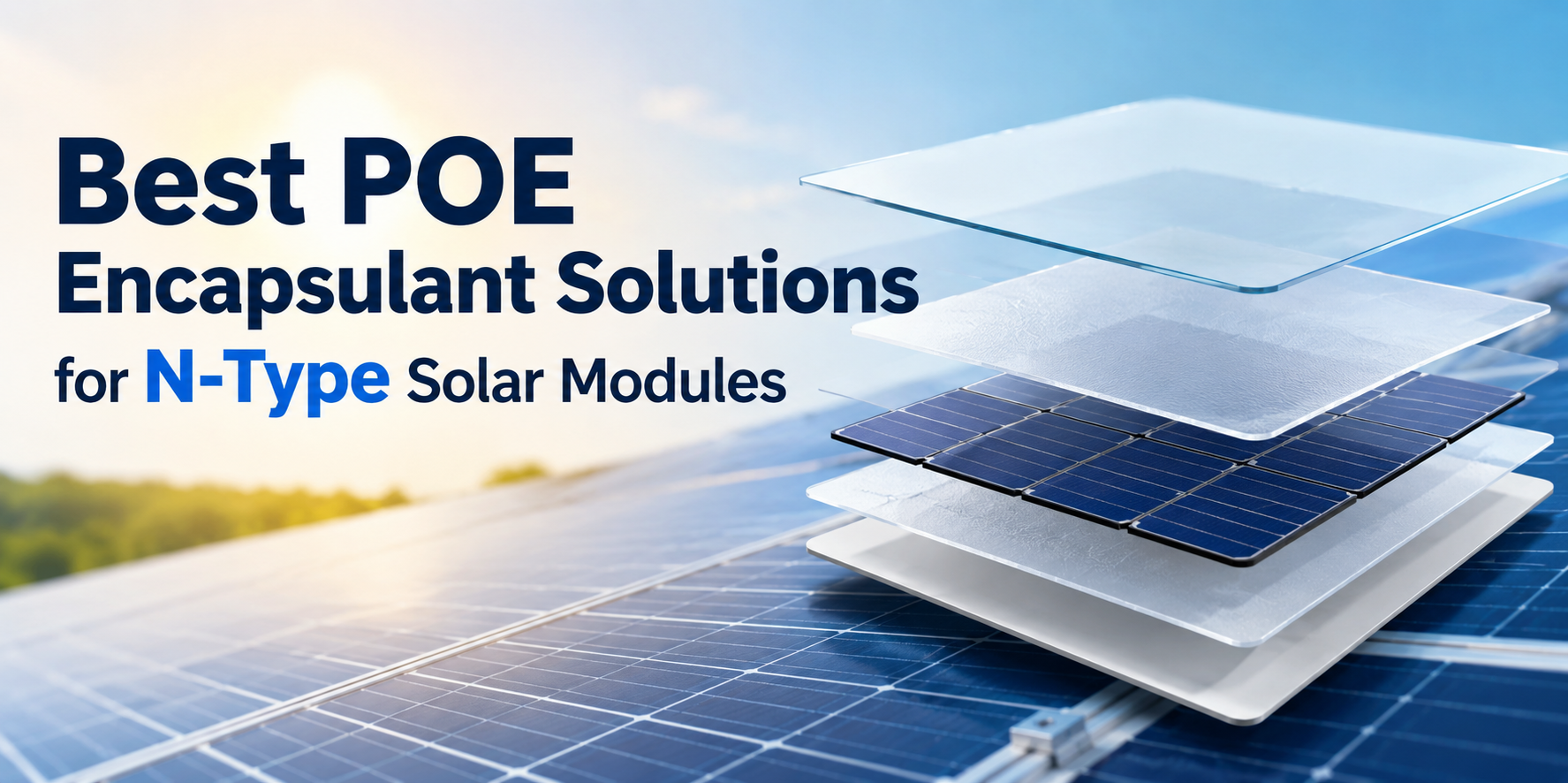
The encapsulant is placed between the solar cells and the glass or backsheet during the manufacturing process. Its main purpose is to keep the solar cells safe while allowing sunlight to pass through efficiently.
POE films have become popular because they provide strong protection against moisture and electrical issues that can reduce solar panel performance over time.
Why Encapsulation Matters in Solar Panels
Solar panels are expected to work efficiently for more than 25 years. During this period, they are exposed to rain, humidity, sunlight, heat, and changing weather conditions.
Without proper protection, solar cells can suffer from:
- Moisture damage
- Corrosion
- Electrical leakage
- Reduced power output
- Faster aging of components
A high-quality encapsulant acts as a protective layer that helps maintain the performance and reliability of the solar module throughout its lifespan.
Understanding N-Type Solar Modules
N-Type solar modules are considered one of the most advanced solar technologies available today. They are known for their high efficiency, better energy production, and lower degradation rates compared to traditional P-Type modules.
Popular N-Type technologies include:
- TOPCon Solar Modules
- HJT Solar Modules
- IBC Solar Modules
These technologies offer excellent performance, but they also require stronger protection from moisture and electrical issues. This is where POE encapsulants become highly valuable.
Why POE Encapsulants Are Ideal for N-Type Solar Modules
Excellent Moisture Protection
One of the biggest advantages of POE encapsulants is their ability to resist moisture.
Water vapor can enter a solar module over time and damage the solar cells. This can lead to corrosion and lower energy production.
POE films provide a stronger moisture barrier than many traditional encapsulation materials. This helps keep the solar cells protected and improves the lifespan of the module.
Better PID Resistance
Potential Induced Degradation, commonly known as PID, is a problem that can reduce the power output of solar panels.
PID occurs when unwanted electrical currents affect the solar cells, causing efficiency losses.
POE encapsulants offer excellent electrical insulation, helping reduce the risk of PID. This is especially important for N-Type modules, which are often used in high-performance solar projects.
Improved Long-Term Reliability
Solar project developers and investors want panels that can perform consistently for decades.
POE encapsulants help maintain module performance by protecting solar cells from environmental stress. Their strong resistance to heat, humidity, and electrical degradation contributes to long-term reliability.
As a result, solar panels can continue generating electricity efficiently for many years.
Strong Electrical Insulation
Electrical insulation is another key benefit of POE films.
Good insulation helps prevent leakage currents and protects the internal components of the solar module.
This feature is particularly important for advanced N-Type technologies, where maintaining stable electrical performance is essential.
POE Encapsulants for TOPCon Solar Modules
TOPCon technology is becoming one of the fastest-growing segments in the solar industry.
TOPCon modules deliver higher efficiency and improved energy generation. However, they are more sensitive to moisture and electrical issues than traditional solar modules.
POE encapsulants are often selected for TOPCon applications because they provide:
- Excellent moisture resistance
- Strong PID protection
- High transparency for sunlight transmission
- Long-term stability
By using POE encapsulants, manufacturers can improve the overall durability and performance of TOPCon solar modules.
POE Encapsulants for HJT Solar Modules
HJT, or Heterojunction Technology, is another advanced N-Type solar technology.
HJT modules are known for their high efficiency and excellent performance in different weather conditions.
These modules require encapsulation materials that support sensitive cell structures and maintain strong protection over time.
POE encapsulants are well suited for HJT modules because they offer:
- Excellent cell protection
- Low moisture penetration
- High optical clarity
- Reliable long-term performance
This combination helps maximize the energy output of HJT solar panels.
POE vs EVA Encapsulants
For many years, EVA encapsulants have been widely used in solar panel manufacturing. However, as solar technology advances, many manufacturers are moving toward POE solutions for N-Type modules.
Here are some key differences:
Moisture Resistance
POE provides better protection against moisture than EVA, making it more suitable for advanced solar technologies.
PID Protection
POE offers stronger resistance to PID, helping maintain module efficiency over time.
Electrical Performance
POE has better electrical insulation properties, which improve module reliability.
Cost
EVA is generally less expensive, but POE often provides greater long-term value due to improved performance and durability.
For modern N-Type solar modules, POE is often considered the better choice.
Factors to Consider When Choosing a POE Encapsulant
Not all POE encapsulants are the same. Manufacturers should evaluate several factors before making a selection.
Optical Transparency
The encapsulant should allow maximum sunlight to reach the solar cells. Higher transparency helps improve energy production.
Adhesion Strength
Strong bonding between the encapsulant, glass, and backsheet is important for long-term module stability.
Moisture Resistance
A good POE film should provide excellent protection against humidity and water vapor.
Electrical Insulation
High insulation properties help reduce electrical losses and improve safety.
Durability
The encapsulant should maintain its performance under harsh environmental conditions for many years.
Future of POE Encapsulation Technology
As N-Type solar modules continue to dominate the market, the use of POE encapsulants is expected to grow significantly.
Manufacturers are investing in new POE technologies that offer:
- Better durability
- Improved efficiency
- Enhanced protection
- Longer module lifespan
The increasing adoption of TOPCon, HJT, and bifacial solar modules is also driving demand for advanced encapsulation materials.
In the coming years, POE encapsulants are expected to become an even more important part of solar panel manufacturing.
Conclusion
POE encapsulants have become one of the best solutions for N-Type solar modules. Their ability to provide excellent moisture protection, strong PID resistance, and reliable long-term performance makes them an ideal choice for modern solar technologies.
Whether used in TOPCon, HJT, or other advanced N-Type modules, POE encapsulants help improve durability, efficiency, and overall module reliability. As the solar industry continues to evolve, POE films are likely to play a key role in supporting the next generation of high-performance solar panels.
Choosing the right POE encapsulant like raynex solar today can help ensure better solar panel performance and greater energy production for years to come.