
Complete Guide to Modern Resin Floor Solutions for Basements
If your basement floor looks dull, cracked, or just plain ugly you’re not alone. Most homeowners in Woodland Park, NJ ignore their basement floors for years. Then one day, they decide to finish the space and have no idea where to start.
This guide is for you. Whether you want a home gym, a playroom, a workshop, or just a cleaner-looking storage area your floor matters. And resin flooring is one of the best upgrades you can make down there.
You’ll find practical advice here. Real tips. No fluff. Just everything you need to make a smart decision about your basement floor.
If you’ve been searching for epoxy flooring contractors in your area, this guide will help you understand what they do, what to ask them, and how to pick the right one. Knowing the basics before you hire someone saves you time, money, and headaches.
Let’s dig in.
What Is Resin Flooring, Really?
Resin flooring isn’t one product. It’s a category. Think of it like “paint” — there are dozens of types.
The most common ones you’ll hear about:
- Epoxy — the most popular for basements
- Polyurethane — flexible, great over epoxy as a topcoat
- MMA (Methyl Methacrylate) — fast-curing, used in commercial spaces
- Polyaspartic — similar to epoxy but cures in hours, not days
Each one has strengths. Each one has limits. The right choice depends on your basement, your budget, and how you plan to use the space.
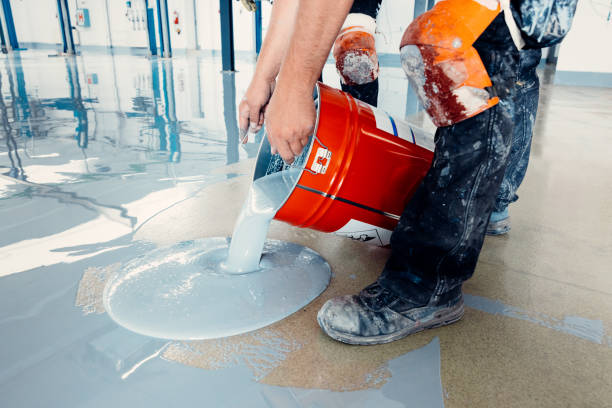
Resin floors are poured or rolled directly onto concrete. They bond to the slab and create a hard, seamless surface. No grout lines. No seams. No tiles popping up in five years.
Why Basements Are Different
Here’s the thing about basements: they’re tough on floors. They sit below grade, which means moisture is always nearby. Temperatures swing. Humidity climbs. Concrete sweats.
Most flooring options can’t handle that long-term. Laminate buckles. The carpet grows mold. Vinyl lifts at the edges. Resin floors are built for exactly this kind of environment when they’re applied correctly.
That “correctly” part is important. A bad install fails fast. Bubbles appear. The coating peels. You’re back to bare concrete in two years.
This is why locals in Woodland Park, NJ often call professionals for basement floor projects. The prep work alone can make or break the entire job.
If you’re considering epoxy floor basement upgrades, the most important thing isn’t the product — it’s the preparation. We’ll cover that in detail later.
Types of Resin Systems (Plain English Version)
Epoxy Resin
Epoxy is two parts a resin and a hardener. Mix them together and a chemical reaction begins. The result is a hard, plastic-like surface bonded to your concrete.
There are different formulas:
- Water-based epoxy — lower odor, easier to apply, thinner build
- Solvent-based epoxy — stronger fumes, deeper penetration into concrete
- 100% solids epoxy — thickest build, most durable, used by pros
For most Woodland Park basements, 100% solid epoxy applied by a professional is the gold standard. It’s thicker, tougher, and lasts longer than the DIY kits you find at the hardware store.
Polyurethane
Polyurethane (PU) is often used as a topcoat over epoxy. It’s more flexible and UV-stable. If your basement gets any sunlight through small windows, PU topcoats prevent yellowing.
On its own, polyurethane is a great choice for spaces with heavy foot traffic or light vehicle use.
MMA (Methyl Methacrylate)
MMA cures in about an hour. That’s its superpower. It can be applied in cold temperatures — something epoxy struggles with. For commercial basements or spaces that need to be operational fast, MMA is worth considering.
The downside? It smells strong during application. Ventilation is a must.
Polyaspartic
Think of polyaspartic as the newer, faster epoxy. It can be applied as a full system primer, body coat, topcoat in a single day. Cures quickly. Holds up well. More expensive than epoxy, but the fast turnaround time is a big plus for busy households.
Basement-Specific Challenges You Need to Know About
Moisture Is the Enemy
Concrete isn’t waterproof. It’s porous. Water vapor moves through it constantly. If you seal that vapor under a resin coating without addressing it first, the coating will lift.
Here’s how professionals test moisture:
- Calcium chloride test — measures how much moisture evaporates from the slab
- Relative humidity probe — drilled into the concrete, gives a reading from inside the slab
Acceptable moisture levels vary by product. Ask your contractor what thresholds they work with. Any professional worth hiring will test before they coat.
Temperature and Humidity
Most resin products require temperatures above 50°F during application. Below that, the chemistry slows down. Curing takes longer. Results suffer.
In New Jersey, basements can get cold in winter. If you’re planning a fall or winter install, make sure your contractor either uses an MMA product (which tolerates cold) or heats the space adequately before starting.
Cracks and Surface Damage
Surface cracks happen. Concrete moves. It’s normal. But cracks need to be filled before any coating goes down.
- Dormant cracks (not growing) can be filled with epoxy filler
- Active cracks (still moving) need flexible polyurethane repair
Don’t skip this step. A crack that’s not repaired will telegraph right through your new floor.
Surface Preparation — The Most Important Part
Ask any experienced professional and they’ll tell you: the coating is only as good as the prep.
Here’s what proper prep looks like:
- Shot blasting or diamond grinding — mechanical abrasion creates a surface profile. The resin has something to grip onto.
- Degreasing — oil contamination is invisible but ruins adhesion. Garage floors and workshop floors especially need this.
- Crack and joint repair — filled with compatible materials before priming.
- Moisture treatment — if moisture is present, a vapor barrier primer goes down first.
DIY kits often skip or underdo the prep. That’s why DIY epoxy floors peel within a year or two. The product isn’t bad the process was rushed.
Design Options That Actually Look Great
One of the biggest surprises for homeowners? How beautiful a resin floor can look.
This isn’t your grandfather’s gray garage floor. Modern resin systems come in dozens of finishes.
Solid Color Systems
Clean, minimal, easy to maintain. Great for gyms, laundry rooms, and utility spaces. Light colors (whites, creams, light grays) make basements feel larger and brighter.
Decorative Flake (Chip) Systems
Colored vinyl flakes are broadcast onto the wet base coat. When sealed, they create a speckled, textured look. This is the most popular finish for residential basements in the Woodland Park, NJ area — and for good reason. It hides dirt well and adds grip underfoot.
Metallic Epoxy
Metallic pigments swirl inside the epoxy to create a marble-like, three-dimensional effect. Every floor looks different. If you want a showstopper, this is it.
Quartz Broadcast Systems
Similar to flake systems, but with quartz aggregate. Creates a sandpaper-like texture. Excellent slip resistance. Good for wet areas, laundry rooms, or spaces where kids and pets run around.
Polished Resin and Terrazzo-Style Finishes
High-end look. Often seen in commercial spaces, but growing in popularity for finished residential basements. Aggregate is embedded in the epoxy, then the surface is ground and polished to a mirror shine.
The Installation Process, Step by Step
Here’s what a professional installation looks like from start to finish.
Day 1: Prep
- Mechanical surface preparation (grinding or shot blasting)
- Crack filling and joint treatment
- Moisture testing and any necessary primer
Day 2 (or same day for fast-cure systems): Priming
- Penetrating epoxy primer applied and left to cure
- This bonds to the concrete and seals the surface
Day 3: Body Coat
- Main epoxy layer applied
- Decorative elements (flakes, metallics, quartz) added if applicable
Day 4: Topcoat
- Polyurethane or polyaspartic topcoat applied
- This protects the color layer and adds sheen
Day 5–7: Cure
- Light foot traffic usually OK after 24 hours
- Full cure (heavy use, furniture) typically 5–7 days
For polyaspartic systems, this whole timeline can compress to 1–2 days.
DIY vs. Hiring a Professional
Let’s be honest about this. You can buy a DIY epoxy kit for $100–$200. You can do it yourself over a weekend.
Should you?
For small utility areas, light use, and low budgets — maybe. The results won’t be the same as a professional job, but they can be acceptable.
For any of the following situations, hire a professional:
- The basement has moisture issues
- You want a decorative finish (flake, metallic, quartz)
- The space will be used as a living area, gym, or office
- The concrete has significant cracking or damage
- You want the floor to last 15–20+ years
What to look for in a contractor:
- They test for moisture before quoting
- They can explain their surface prep process in detail
- They use commercial-grade products, not hardware store kits
- They provide a written warranty on labor and materials
- They have reviews or references from local jobs in your area
Our team has worked on dozens of basement floor projects across Woodland Park, NJ and the surrounding communities. We’ve seen what good installs look like and what shortcuts cost homeowners down the road.
Performance, Durability, and What to Expect
How Long Does It Last?
A professionally installed epoxy or polyaspartic floor in a residential basement should last 15–20 years with basic maintenance. Some systems last longer.
Factors that affect longevity:
- Quality of surface prep
- Product system selected
- How the space is used
- Whether the floor is properly maintained
Chemical Resistance
Epoxy floors resist most household chemicals — oils, cleaning products, mild acids. They’re not invincible, but they’re far more resistant than bare concrete or painted surfaces.
Slip Resistance
Smooth epoxy can be slippery when wet. That’s why most installers add anti-slip additives to the topcoat aluminum oxide or fine silica sand. Always ask about this, especially in laundry rooms or near basement entry points.
Maintenance and Long-Term Care
Resin floors are easy to maintain. That’s part of the appeal.
Daily care:
- Sweep or dust mop regularly
- Wipe up spills quickly — especially acidic liquids like vinegar or citrus cleaners
Weekly care:
- Mop with a pH-neutral cleaner
- Avoid bleach, ammonia-based cleaners, or abrasive pads
What to avoid:
- Dragging heavy equipment or furniture without padding
- Using steel wool or harsh scrubbing pads
- Letting standing water sit for extended periods
When does the floor need attention?
- If the surface looks dull and mopping doesn’t help, it may need a new topcoat
- Surface scratches in the topcoat only? A recoat refreshes the look without redoing the whole floor
- Adhesion failure or widespread peeling? That’s a full redo — usually due to moisture or bad prep
Practical tip: Put felt pads under all furniture legs. They’re cheap, take two minutes to apply, and prevent scratches that accumulate over years.
Cost and Budgeting Guide
Here’s a realistic breakdown for a Woodland Park, NJ area basement floor project.
| System Type | Cost Range (per sq ft, installed) | Best For |
| Basic water-based epoxy | $2–$4 | Light storage, utility use |
| 100% solids epoxy (solid color) | $4–$6 | General use, gyms, workshops |
| Decorative flake system | $5–$8 | Living spaces, rec rooms |
| Metallic epoxy | $7–$12 | Showroom-style finishes |
| Polyaspartic system | $6–$10 | Fast turnaround, high durability |
| Quartz broadcast system | $6–$9 | Wet areas, high-traffic spaces |
Additional costs to budget for:
- Moisture remediation: $500–$2,000+ depending on severity
- Crack repair: $100–$500 depending on number and type
- Moving appliances or built-ins: Variable
Get at least three quotes. Ask each contractor to break down labor vs. materials. The cheapest quote isn’t always the best value — ask what products they’re using and how many coats they’re applying.
Health, Safety, and the Environment
Ventilation During Installation
Most resin products have strong fumes during application. Professional contractors ventilate the space properly. During installation and curing, keep children and pets out of the area.
Water-based epoxy systems have lower VOC content and are a good option if fume sensitivity is a concern.
Safety Equipment
Pros wear gloves, safety glasses, and respirators during installation. For DIY projects, don’t skip this. Epoxy hardeners can irritate skin and eyes.
Environmental Considerations
If sustainability matters to you, ask contractors about:
- Low-VOC or zero-VOC product options
- Bio-based epoxy systems (plant-derived components)
- Proper disposal of leftover mixed resin
Most modern product manufacturers offer eco-friendlier formulations. They perform well and are worth asking about.
Emerging Trends Worth Knowing
Resin flooring technology keeps improving. Here’s what’s gaining traction right now.
Underfloor heating compatibility — Most resin systems are compatible with radiant heat systems embedded in concrete. This is a growing trend for finished basements used as living spaces.
Electrically conductive floors — Specialized epoxy systems dissipate static electricity. Useful for home offices with sensitive electronics or workshop areas.
Digital visualization tools — Some contractors now offer augmented reality previews. You can see what a metallic epoxy or flake system looks like in your actual space before committing.
Bio-based resins — Plant-derived epoxy hardeners are becoming more available. Performance is comparable to petroleum-based products, with a smaller carbon footprint.
Frequently Asked Questions
Q: How long does a basement resin floor last?
A professionally installed system typically lasts 15–20 years. Proper prep and good maintenance are the biggest factors.
Q: Can resin flooring be applied over old paint or coatings?
Sometimes, but it depends. The existing coating needs to be well-adhered, clean, and compatible. Often it’s better to remove it first. Your contractor should test this.
Q: Is epoxy flooring safe for kids and pets once it’s cured?
Yes. Fully cured epoxy is inert and non-toxic. During application and curing, keep the area clear due to fumes.
Q: How do I know if my basement has a moisture problem
Visible efflorescence (white powder on concrete), musty smell, or past flooding are signs. A professional moisture test gives you a definitive answer.
Q: Can I install resin flooring myself?
For light-use utility areas, DIY kits can work. For decorative finishes, moisture-prone basements, or spaces used as living areas — hire a professional. The prep alone requires equipment most homeowners don’t own.
Q: How soon can I use the floor after installation?
Light foot traffic is usually okay after 24 hours. Furniture and heavy use — wait 5–7 days. Polyaspartic systems can be ready faster.
Q: What’s the difference between epoxy and polyaspartic?
Both are resin-based floor coatings. Epoxy is more affordable and widely used. Polyaspartic cures faster and resists UV better. Many premium systems combine both.