
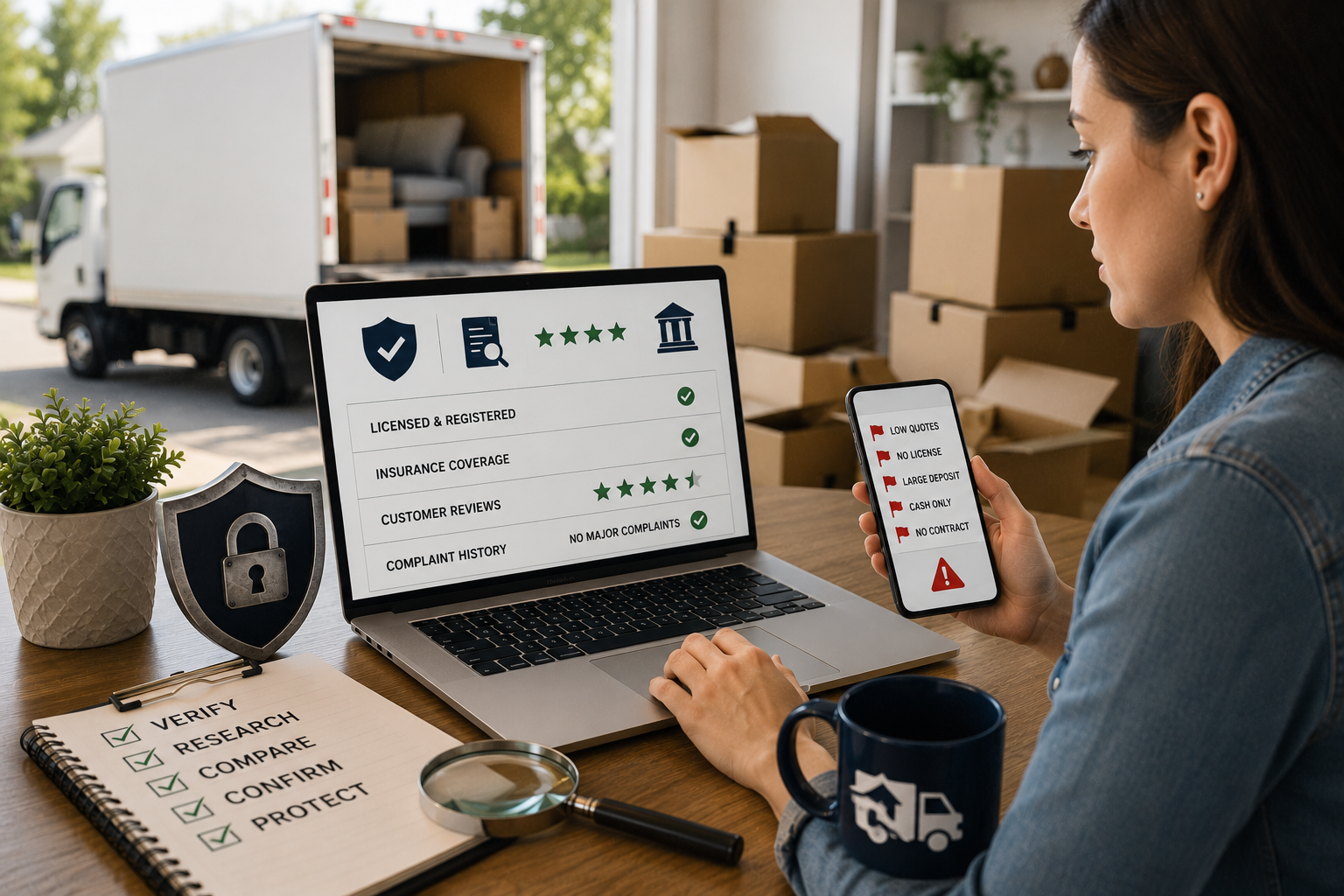
How to Verify a Moving Company and Avoid Costly Moving Scams
Moving is one of the most important transitions in life. Whether relocating across town or across the country, choosing the right mover can make the difference between a smooth experience and a financial nightmare. Unfortunately, moving scams continue to affect thousands of consumers every year, resulting in lost belongings, unexpected charges, delayed deliveries, and significant stress.
To verify a moving company in USA, we must follow a structured process that confirms legitimacy, licensing, reputation, insurance coverage, and customer satisfaction before signing any contract. Taking a few extra steps before hiring a mover can prevent costly mistakes and ensure a safe relocation experience.
Why Verifying a Moving Company Matters
The moving industry contains many reputable businesses, but fraudulent operators often target customers who are unfamiliar with industry regulations. Scam movers may offer unrealistically low estimates, demand large upfront deposits, or hold household goods hostage until additional fees are paid.
By properly verifying a moving company, we gain confidence that the business operates legally, follows federal regulations, and has a proven record of serving customers professionally.
The verification process should never be skipped, regardless of whether the move is local, long-distance, residential, or commercial.
Check Federal Registration and Licensing
One of the first steps to verify a moving company in USA is confirming its registration status.
For interstate moves, legitimate movers must be registered with the Federal Motor Carrier Safety Administration (FMCSA) and possess a valid USDOT number. This registration allows consumers to review important details about the company’s operating authority and compliance history.
When evaluating a moving company, verify:
- Active USDOT number
- Current operating authority
- Company legal name
- Physical business address
- Safety record
- Complaint history
- Insurance information
Any mover unwilling to provide registration information should be considered a major red flag.
Verify Business Address and Contact Information
Legitimate moving companies maintain a physical business location and professional communication channels.
Before hiring a mover, confirm:
- Physical office address
- Business phone number
- Professional website
- Company email address
- Local business listings
Search the address online to ensure it is an actual office or warehouse location rather than a residential property, vacant lot, or virtual office service.
Scam operators frequently use temporary addresses that disappear shortly after collecting deposits.
Read Independent Customer Reviews
Customer feedback provides valuable insight into a moving company’s reliability.
Look for patterns across multiple review platforms rather than focusing on a single review source. Consistent positive feedback regarding punctuality, professionalism, communication, and careful handling of belongings usually indicates a trustworthy mover.
Pay special attention to complaints involving:
- Hostage loads
- Unexpected charges
- Missed delivery dates
- Damaged items
- Unresponsive customer service
- Deposit disputes
While every company may receive occasional complaints, recurring issues suggest deeper operational problems.
Request an In-Home or Virtual Survey
Reliable movers typically conduct a detailed survey before providing an estimate.
A representative should evaluate:
- Number of rooms
- Furniture size
- Specialty items
- Packing requirements
- Access conditions
- Distance of the move
Avoid companies that provide binding quotes without reviewing the inventory. Unrealistically low estimates are often used to secure bookings before significantly increasing costs on moving day.
A professional survey creates more accurate pricing and reduces the risk of surprise charges.
Understand Moving Estimates Before Signing
Moving estimates generally fall into several categories.
Binding Estimate
A binding estimate guarantees the cost based on the agreed inventory and services.
Non-Binding Estimate
The final price may vary based on actual shipment weight and services performed.
Binding Not-to-Exceed Estimate
Customers pay less if the shipment weighs less than estimated but never more than the quoted amount.
Understanding estimate types helps avoid confusion and protects consumers from unexpected expenses.
Always request written estimates and compare multiple companies before making a decision.
Review Insurance and Valuation Coverage
Many consumers assume movers provide full insurance coverage automatically. This is often not the case.
Before booking, verify available protection options and understand coverage limitations.
Common options include:
- Basic valuation coverage
- Full value protection
- Third-party insurance policies
Request documentation explaining coverage terms and claim procedures.
Proper protection can save thousands of dollars if items are damaged or lost during transit.
Watch for Common Moving Scam Warning Signs
Recognizing red flags is essential when trying to verify a moving company in USA.
Common warning signs include:
Large Upfront Deposits
Most reputable movers do not require substantial deposits before the move.
Extremely Low Estimates
Prices significantly below competitors often indicate a bait-and-switch tactic.
No Written Contract
Every service agreement should be documented in writing.
Lack of Licensing Information
Legitimate movers openly provide registration details.
Generic Rental Trucks
Professional companies typically operate branded vehicles displaying company information.
Pressure Sales Tactics
High-pressure booking demands should immediately raise concerns.
Research Complaint Histories
A company’s complaint history can reveal recurring operational issues.
Review:
- Consumer protection agencies
- State regulatory authorities
- Industry organizations
- Online review platforms
Look beyond the overall rating and analyze how management responds to customer concerns.
Companies that actively resolve issues often demonstrate a stronger commitment to customer service.
Confirm Experience and Industry Reputation
Years of experience can indicate stability and professionalism.
When evaluating movers, consider:
- Time in business
- Specialized moving services
- Employee training programs
- Fleet size
- Service areas
- Industry certifications
Established companies generally possess the resources and expertise necessary to handle complex relocations successfully.
Request Detailed Written Documentation
Before committing to a mover, ensure all agreements are documented.
Important documents include:
- Written estimate
- Bill of lading
- Inventory list
- Insurance documentation
- Service agreement
- Payment terms
Read every document carefully before signing.
Never rely on verbal promises regarding pricing, delivery schedules, or additional services.
Protect Yourself on Moving Day
Verification does not end once the contract is signed.
On moving day:
- Confirm crew identification
- Verify truck branding
- Review inventory sheets
- Take photographs of belongings
- Keep important documents accessible
- Monitor loading procedures
These precautions create valuable records if disputes arise later.
Learning from Real Moving Scam Stories
Many consumers only recognize moving fraud after experiencing it firsthand. Real-world cases often involve low initial estimates that dramatically increase after loading, delayed deliveries, or demands for additional payments before goods are released.
Resources such as Moving Scam Stories have highlighted numerous examples where customers suffered financial losses because they failed to verify licensing, insurance, and company credentials beforehand. These situations reinforce the importance of conducting thorough research before selecting a mover.
Questions to Ask Before Hiring Any Moving Company
Before making a final decision, ask:
- Are you licensed and insured?
- What is your USDOT number?
- Is the estimate binding or non-binding?
- What valuation coverage is included?
- Are there additional fees?
- What is the delivery timeline?
- How are claims handled?
- Do you use subcontractors?
- What payment methods do you accept?
Professional movers answer these questions clearly and transparently.
How to Compare Multiple Moving Companies
A side-by-side comparison often reveals important differences.
Evaluate companies based on:
| Factor | What to Check |
|---|---|
| Licensing | Active registration status |
| Reviews | Consistent customer satisfaction |
| Pricing | Transparent written estimates |
| Insurance | Adequate protection options |
| Experience | Years in operation |
| Communication | Professional responsiveness |
| Contracts | Clear written agreements |
| Complaint History | Resolution of customer issues |
Comparing multiple providers increases the likelihood of selecting a reliable mover.
Final Thoughts
The best way to verify a moving company in USA is through careful research, documentation review, licensing verification, and customer feedback analysis. Taking the time to confirm credentials before signing a contract can prevent fraud, hidden charges, delayed deliveries, and property loss.
A trustworthy moving company will welcome questions, provide transparent documentation, maintain proper licensing, and demonstrate a proven history of customer satisfaction. By following these verification steps, we can confidently select a mover that delivers a safe, professional, and stress-free relocation experience.