
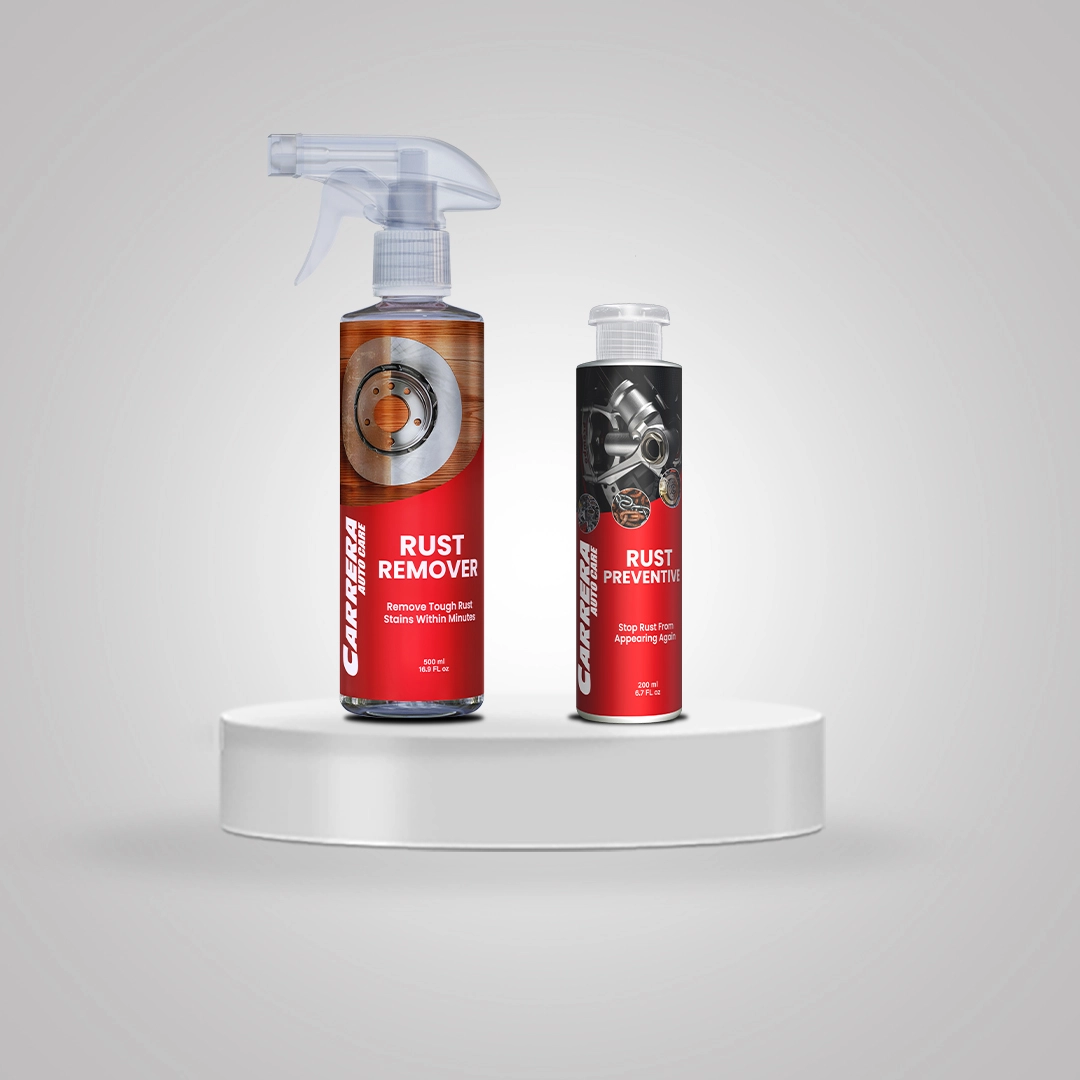
Rust Preventive for Cars in Pakistan
This matters across Pakistan. Karachi and other coastal locations combine humidity with salt-laden air. Monsoon weather exposes vehicles to repeated wetting. Dust and mud can collect in wheel arches, seams, drain channels, and underbody recesses. In dry regions, owners may underestimate rust, yet water from washing, condensation, coolant leaks, battery residue, or occasional rain can still reach exposed steel.
Carrera Rust Preventive can fit into seasonal maintenance when it is applied to a properly prepared, compatible surface. The product label remains the authority for application distance, drying time, surface restrictions, ventilation, and reapplication.
What Is a Rust Preventive?
A rust preventive is a coating or treatment intended to slow corrosion. Depending on the formula, it may leave a waxy, oily, dry, or paintable film. It is different from rust remover. Remover addresses corrosion already present; preventive protects clean or correctly treated metal from renewed exposure.
The word “preventive” does not mean a vehicle becomes immune to rust. A film can be worn away by abrasion, heat, pressure washing, road debris, or harsh cleaners. Coverage may also be incomplete inside folded seams. Prevention works best as a system: inspect, clean, repair, dry, coat, and recheck.
Areas That May Benefit from Protection
### Underbody Brackets and Exposed Hardware
Non-friction metal brackets, bolt heads, and compatible chassis areas can be vulnerable to water and grime. Never coat exhaust components, sensors, drainage openings, or service points unless the label specifically allows it.
Wheel-Arch Seams
These areas receive constant spray from the tyres. They should be cleaned carefully and allowed to dry before application. A preventive applied over trapped mud can seal contamination against the surface.
Door, Bonnet, and Boot Edges
Folded metal edges and seams can hold moisture. Preserve factory drain paths and keep the product away from upholstery, glass mechanisms, and electrical components.
Battery Tray and Engine-Bay Metal
Protection may be useful after the area has been safely cleaned and any battery-related corrosion has been correctly addressed. Disconnecting or handling a battery requires proper precautions. Avoid belts, pulleys, hot components, and electrical contacts.
Stored Parts and Tools
A compatible rust preventive can help protect spare steel components during storage. Clean fingerprints and moisture first, label treated parts, and remove the film if required before installation or painting.
Surfaces and Parts to Avoid
Do not allow a slippery or oily rust preventive on brake discs, pads, drums, tyre tread, steering wheels, pedals, floor mats, drive belts, clutch surfaces, or exhaust heat zones. Do not block drain holes. Avoid oxygen sensors, electrical connectors, alternators, and surfaces that require a clean ground connection.
Paintability also varies. Some protective films can interfere with primer, adhesive, sealant, or future body repair. If a panel will be painted, confirm whether the Carrera product must be removed first. Masking takes a few minutes and can prevent hours of cleanup.
How to Apply Rust Preventive Correctly
### Inspect Before Coating
Use strong lighting to check for loose paint, active rust, damp seams, leaks, and damaged factory coating. If corrosion is already present, use a suitable removal or repair process first. Covering flakes does not restore adhesion.
Wash and Remove Contamination
Remove mud, salt, oil, and loose debris with products appropriate for the surface. Pay attention to wheel arches and lower seams. Residual cleaner can also affect bonding, so rinse or wipe as directed.
Dry Thoroughly
Moisture trapped beneath a barrier defeats the purpose. Allow enough drying time after washing, especially in folded seams and around bolt heads. Compressed air can help only when used safely and without forcing water deeper into cavities.
Mask Sensitive Components
Use masking film, paper, and tape to protect braking systems, tyres, exhaust parts, wiring, rubber items, paint, and floors. Overspray travels farther than it appears, particularly outdoors.
Test Compatibility
Apply a small amount in a hidden location. Check the finish after the stated drying period. This is important on plastics, rubber, painted surfaces, plated hardware, and previous aftermarket coatings.
Apply a Controlled, Even Layer
Shake or prepare the product only as directed. Apply thin, overlapping passes rather than flooding one spot. Heavy application can sag, remain tacky, attract dust, or drip into unwanted areas. Maintain ventilation and keep away from sparks or flame if the label identifies the product as flammable.
Let the Film Cure
Do not drive, wash, or expose the area to dust until the label’s curing guidance has been satisfied. A surface that feels dry may still be curing underneath.
Inspect the Finished Coverage
Look from several angles for missed edges and excessive buildup. Remove masking carefully. Wipe accidental overspray only with a method approved for both the preventive and the affected material.
Seasonal Protection for Pakistani Conditions
Before monsoon season, examine stone chips, lower door seams, wheel wells, the spare-wheel compartment, and previous repair areas. Treat small defects early. After the rains, wash away mud and inspect whether the protective film remains intact.
In coastal regions, more frequent checks may be sensible because salt accelerates electrochemical corrosion. Cars stored near the sea should not remain under a damp, non-breathable cover. Inland vehicles also benefit from inspection after floodwater, muddy travel, or extended outdoor storage.
During very hot weather, store Carrera Rust Preventive away from direct sunlight and excessive heat. Product performance and container safety depend on correct storage. Never keep an aerosol in a hot passenger compartment.
Combining Prevention with Washing and Waxing
Body paint, underbody metal, and cavities require different protection. A wash-and-wax product can help maintain exterior gloss and water behaviour, but it is not automatically a substitute for a dedicated corrosion preventive on exposed steel. Hard wax protects compatible painted surfaces; it should not be assumed to protect hidden structural seams.
Build a layered routine. Wash the vehicle, decontaminate where necessary, repair chips, remove active rust, apply the correct corrosion treatment, and maintain painted surfaces with suitable protection. Each product should have one clear job.
Common Rust-Prevention Mistakes
Applying over wet metal is the most serious error. Spraying over active flaky rust is another. Excessive film thickness, missing masking, blocked drainage holes, and coating hot components can create new problems. Some owners pressure-wash a newly treated underbody before curing is complete, while others never inspect the coating again.
A preventive should not be used to disguise corrosion before selling a vehicle. Transparent maintenance records and proper repairs protect both safety and resale trust. If corrosion is structural, seek qualified body or mechanical advice.
How to Check Whether Protection Still Works
Use a torch and inspect treated surfaces every few months. Look for cracks, dry patches, peeling, abrasion, trapped dirt, or fresh orange staining. Examine high-impact zones more often. After repairs or part replacement, confirm whether the protective film was restored.
Do not judge only by water beading. A surface may bead while an uncoated seam nearby is corroding. Physical coverage, adhesion, and the condition of the base metal matter more than a dramatic water effect.
Choosing Carrera Rust Preventive in Pakistan
Buy from a reliable retailer and inspect the package for an intact seal, readable directions, and storage information. Select the product by intended surface, not only by price or can size. If the label does not mention a sensitive material or safety-critical application, contact Carrera or avoid the application.
A well-maintained vehicle reflects consistent small decisions. Carrera’s car-care range can help owners connect corrosion control with washing, cleaning, and paint protection, creating a routine that suits everyday use in Pakistan.
Frequently Asked Questions
### Can rust preventive be applied over rust?
Only if the label specifically allows application over properly prepared rust. Loose corrosion should be removed, and severe damage requires repair. Clean metal generally offers the best foundation.
How often should it be reapplied?
There is no universal interval. Exposure, abrasion, washing method, climate, and formula all matter. Inspect seasonally and follow the Carrera label.
Is rust preventive safe for rubber and plastic?
Compatibility varies. Mask these materials unless the product directions confirm suitability, and test an inconspicuous area first.
Can I spray it inside doors?
Only use a product approved for cavities and preserve all drain paths. Avoid window mechanisms, speakers, wiring, upholstery, and overspray.
Does a new car need rust protection?
New cars have factory corrosion protection, but chips, repairs, harsh exposure, and age can compromise it. Inspect first and confirm that an aftermarket coating will not affect warranty terms.
Is it suitable for motorcycles?
Possibly on compatible non-hot, non-friction metal, but motorcycle controls, chains, brakes, tyres, and exhausts demand special care. Follow the exact label and vehicle manufacturer guidance.
Conclusion
A rust preventive is most effective when applied before corrosion becomes a repair problem. Clean the surface, remove active rust, dry every seam, mask safety-critical parts, apply an even film, and inspect it through changing seasons. With attention to monsoon moisture, coastal salt, road grime, and storage conditions, Carrera Rust Preventive can help Pakistani motorists preserve exposed automotive metal responsibly.