
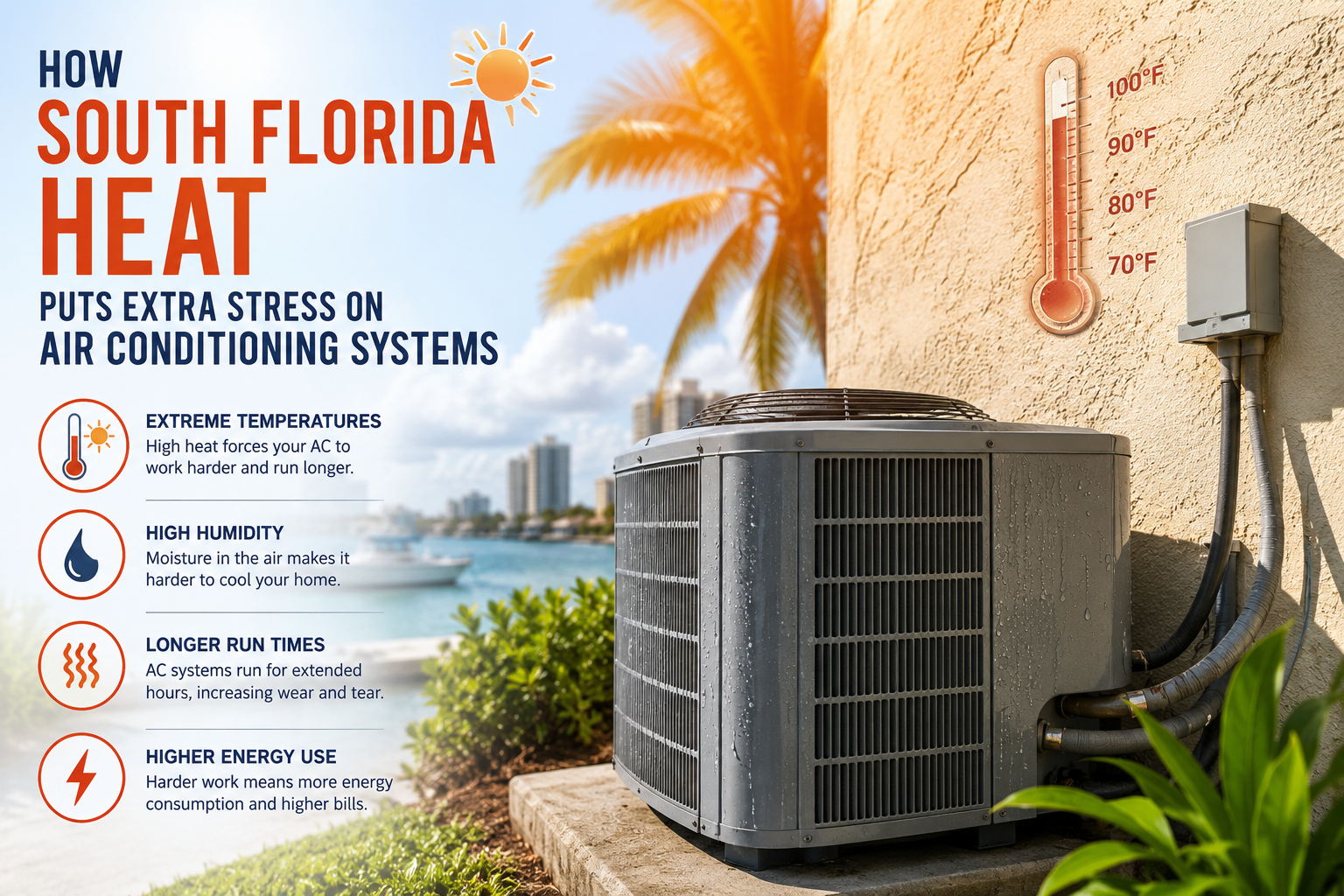
How South Florida Heat Puts Extra Stress on Air Conditioning Systems
A South Florida afternoon can feel heavy before the sun even reaches its hottest point. The air outside is warm, the humidity sits high, and the AC inside the house keeps running with very little rest. At first, that seems normal. After all, cooling systems are made to cool.Still, constant heat changes how hard an air conditioner has to work. In places like Miramar, Hollywood, Pembroke Pines, Fort Lauderdale, and Miami Gardens, the system may run for hours every day. Over time, that pressure can wear down parts, raise energy bills, and increase the chance of repair.
That is why ac repair in Florida is often connected to climate. The heat is not just uncomfortable. It affects filters, coils, motors, drain lines, refrigerant pressure, and the full cooling cycle. This article explains how South Florida weather stresses AC systems, what warning signs to watch for, and how simple care can reduce repair risks.
Heat Never Really Stops
In cooler states, air conditioners get long breaks during fall, winter, and spring. South Florida is different. Even outside peak summer, warm days can still push people to turn on the AC.That steady use matters. Every cooling cycle puts pressure on the fan motor, blower motor, compressor, capacitor, and electrical parts. If the system runs often, those parts naturally wear faster.
The problem is not only the high temperature. It is the lack of recovery time. An AC unit that runs heavily all week has less time to cool down and reset. During long hot periods, small problems can grow quickly.
Runtime Matters
Longer runtime means more movement, more heat inside components, and more electricity use. If the system is clean and properly sized, it can handle this better.However, a dirty or aging unit may struggle. It may still cool the space, but it works harder to do it.
Humidity Adds More Work
Heat gets most of the attention, but humidity is just as demanding. South Florida air often carries a lot of moisture. Your AC has to remove that moisture while lowering the indoor temperature.
That double job adds strain. If airflow is weak or coils are dirty, the system may cool the air but fail to remove enough moisture. The home can feel sticky even when the thermostat looks normal.This is why some people keep lowering the temperature. The room feels uncomfortable, so they set the thermostat lower. Yet the real issue may be poor moisture removal, not just temperature.A system that handles humidity well can make the space feel cooler without extreme settings. That reduces run time and protects the equipment from unnecessary stress.
Dirt Builds Up Faster
South Florida weather brings more than heat. Dust, pollen, grass clippings, storm debris, and salty air near coastal areas can collect around cooling equipment.A dirty filter blocks airflow. Dirty coils reduce heat transfer. A blocked outdoor unit traps heat around the condenser. Each issue forces the system to work harder than it should.Think about the outdoor unit after a summer storm. Leaves, small branches, and wet debris may gather around it. If airflow stays blocked, the AC cannot release heat properly.
That kind of strain often leads to Florida AC repair needs later. The system may start with longer cycles, then weak cooling, then a bigger failure.
Simple Checks That Help
Check the filter once a month. Clear leaves and grass around the outdoor unit. Make sure vents are open and not blocked by furniture.
These small checks do not replace service, but they reduce pressure on the system.
Small Problems Grow Faster
In South Florida, AC issues do not always stay small for long. A weak capacitor may still let the system start today. A dirty coil may still allow some cooling. A slow drain line may not leak yet.Then a heat wave hits. The system runs longer, parts heat up, and the weak point gets worse. That is when a small issue turns into an urgent repair.A common example is weak airflow. At first, one room feels warmer in the afternoon. Later, the coil may freeze because not enough air passes over it. After that, the system may stop cooling completely.
Delaying repairs can make the final cost higher. An early part replacement may be simple. A damaged motor or compressor is a different story.
Energy Bills Tell a Story
A rising power bill is often one of the first signs of AC stress. The system may still run, so nothing seems broken. Yet it may need more electricity to produce the same cooling.
Longer cycles, dirty coils, low refrigerant, and weak parts all waste energy. In South Florida, that waste adds up fast because the AC already runs so often.Picture a family in Miramar. They keep the thermostat at the same setting each week. Suddenly, the bill climbs, but comfort does not improve. That usually means the system is losing efficiency.
Energy bills are not just about cost. They can be an early warning. If the bill rises along with weak airflow or warm rooms, the AC may be under strain.
Protect Your Cooling System
Regular care can reduce stress before it turns into damage. Start with the basics. Replace dirty filters. Keep the outdoor unit clear. Avoid blocking vents. Use ceiling fans to move cool air.Thermostat habits also matter. Setting the AC extremely low will not cool the home faster. It only makes the unit run longer. A steady setting is usually better for comfort and energy use.Seasonal service can also help. During a checkup, a technician can inspect electrical parts, clean coils, test airflow, check refrigerant levels, and look for drain problems.
This type of care reduces the chance of air conditioner repair in Florida becoming urgent. It also helps the system handle long hot months with less strain.
Small Habits Matter
A few minutes each month can make a difference. Look at the filter. Listen for new sounds. Watch for water near the indoor unit. Notice rooms that take too long to cool.These clues are easy to miss, but they often show up before a breakdown.
Before the System Gives Out
Sometimes repair becomes the smarter move. Warm air, frozen coils, burning smells, loud buzzing, water leaks, short cycling, and repeated breaker trips should not be ignored.If you live nearby, a repair miramar may be needed when the system cannot keep up with daily heat. Waiting can push more stress onto expensive parts.
You may also need AC repair in Miramar if the same problem keeps coming back after basic checks. Repeated issues often mean the root cause has not been handled.For South Florida residents, fast action matters. Heat can make indoor temperatures rise quickly, especially for kids, older adults, and pets.
Warning Signs to Watch
Call for help if the system blows warm air, shuts off repeatedly, freezes, leaks, or makes sharp electrical sounds. Those signs usually need more than a filter change.A technician can check the system safely and explain whether the issue is minor or more serious.
Conclusion
South Florida heat puts extra stress on air conditioning systems because the weather stays warm, humid, and demanding for much of the year. Long run times, moisture removal, storm debris, dirty parts, and high daily use all push the system harder.That stress can lead to higher bills, weak cooling, worn parts, and repair needs. Early care makes a difference. Clean filters, clear outdoor units, steady thermostat settings, and timely service all help reduce strain.If the system starts acting differently, do not wait for a full breakdown. In this climate, small problems can move fast. Timely ac repair in Florida can protect comfort, lower stress, and help the cooling system last longer.
FAQs
Why does my AC work harder in South Florida?
South Florida has long hot seasons and high humidity. Your AC must cool the air and remove moisture, which adds extra strain.
Can humidity damage an air conditioner?
Humidity itself does not directly damage every part. However, it creates more condensation and can make drain lines clog faster.
Why are my energy bills getting higher?
Your AC may be running longer because of dirty filters, dirty coils, weak airflow, low refrigerant, or worn parts.
When should I call for AC repair in Miramar?
Call if the system blows warm air, leaks water, freezes, short cycles, trips breakers, or makes loud electrical sounds.
How can I make my AC last longer?
Change filters, keep the outdoor unit clear, avoid extreme thermostat settings, and schedule regular service before peak heat.