
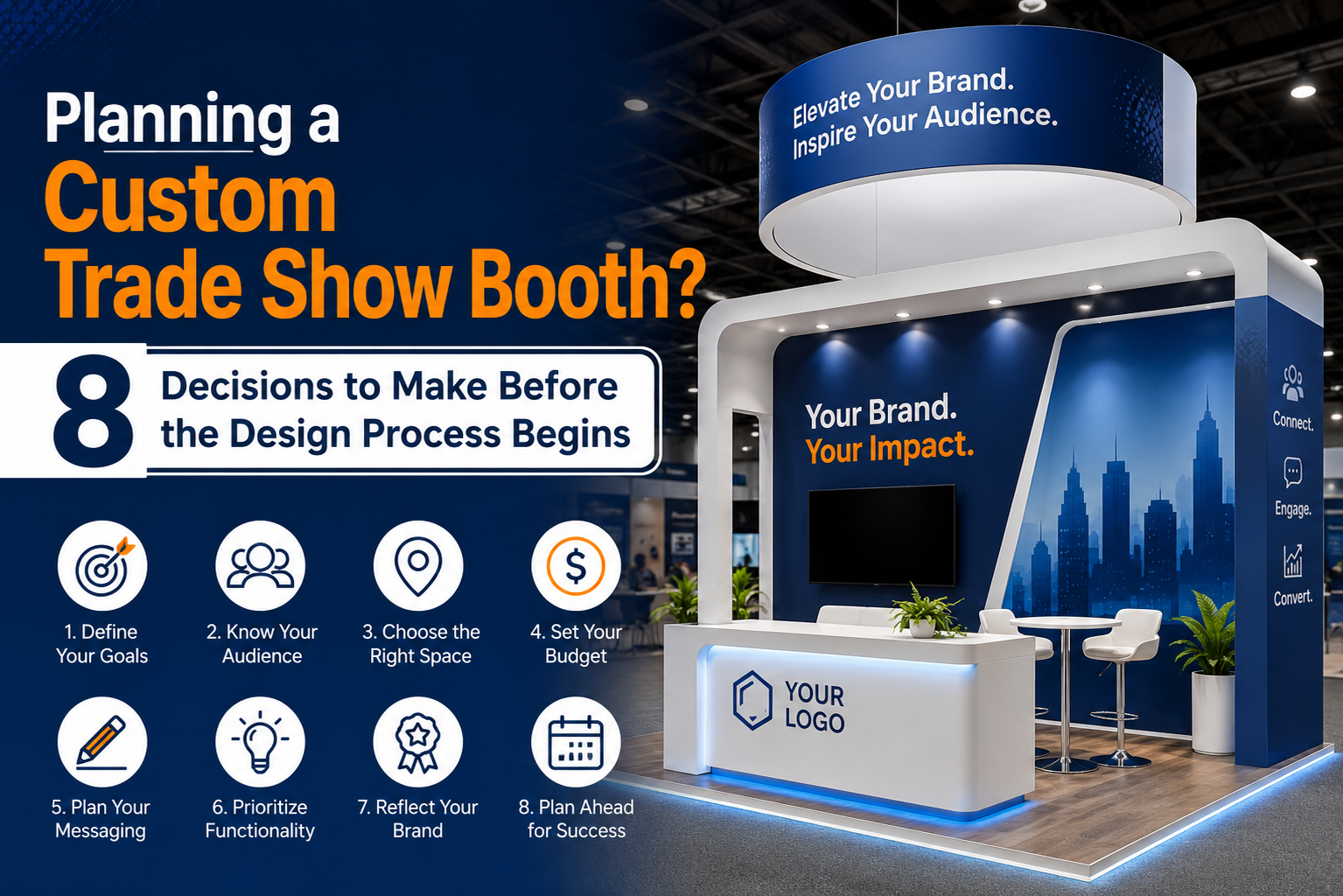
Planning a Custom Trade Show Booth? 8 Decisions to Make Before the Design Process Begins
A successful trade show booth rarely starts with colors, graphics, or a 3D rendering. It starts with decisions.
Many exhibitors begin the design process by asking, “What should our booth look like?” But appearance is only one part of the equation. Before investing in a custom trade show booth, brands need to understand what the space should accomplish, how visitors will use it, and what operational challenges may arise on the show floor.
Making these decisions early can prevent expensive revisions, improve booth functionality, and help the final exhibit support real marketing goals.
Here are eight important decisions every exhibitor should make before custom booth design begins.
Define the Primary Goal of the Booth
Every booth cannot do everything equally well.
One company may attend a trade show to generate qualified leads, while another may focus on launching a product, meeting distributors, building brand awareness, or strengthening relationships with existing customers.
The primary goal should influence the entire booth concept.
For example, a lead-generation booth may require open entry points, quick engagement stations, and digital lead capture tools. A company focused on high-value B2B meetings may need private discussion rooms. A product-driven brand may require demonstration counters, shelving, or hands-on testing areas.
Without a clear goal, even an impressive exhibit can feel disconnected from the business strategy.
Understand Who You Want to Attract
A crowded booth is not always a successful booth.
The real objective is to attract visitors who are relevant to the business. Before developing a custom trade show booth design, define the audience you want to reach.
Consider questions such as:
- Are you targeting buyers or distributors?
- Are attendees technical professionals or senior decision-makers?
- Do visitors already know your brand?
- Will they need education before showing interest?
- Are they likely to stay for several minutes or make quick decisions?
Audience behavior should shape everything from messaging and signage to seating arrangements and interactive experiences.
Decide What Visitors Should Notice First
Trade show attendees are constantly processing visual information. They may see dozens of exhibits within a few minutes, which means your booth needs a clear visual priority.
What is the first thing you want people to understand?
It could be:
- A new product launch
- A major brand message
- A live demonstration
- A unique technology
- A specific service
- A bold campaign concept
Trying to communicate too many messages at once often creates visual clutter. Strong custom trade show booths usually establish a clear hierarchy, helping visitors understand the most important message quickly before discovering additional details.
Plan the Visitor Journey
Think about what happens after someone notices the booth.
Where do they enter? What do they see next? Is there a natural place to speak with a representative? Can they access a product demonstration without blocking other visitors?
Visitor flow is one of the most practical aspects of exhibit planning, yet it is often overlooked.
A well-planned booth may guide attendees through a simple journey:
Attract → Explore → Engage → Discuss → Take Action
The exact sequence will vary depending on the brand and event. However, planning this journey early allows designers to position displays, counters, screens, meeting spaces, and staff areas more effectively.
Identify the Activities That Need Dedicated Space
Before discussing booth architecture, create a list of activities that will happen during the event.
For example:
- Product demonstrations
- One-to-one consultations
- Group presentations
- Private meetings
- Hospitality
- Sample distribution
- Lead capture
- Content creation
- Live streaming
- Product storage
Each activity requires space, and some may compete with others.
A large demonstration area may attract attention but create congestion. A private meeting room may improve conversations but reduce open floor space. A hospitality counter may encourage visitors to stay longer but require additional storage and utilities.
Good custom booth planning is often about balancing these priorities.
Determine Your Real Storage Requirements
Storage is not the most exciting part of booth design, but insufficient storage can quickly create problems.
Exhibitors may need space for:
- Personal belongings
- Marketing materials
- Product samples
- Giveaways
- Packaging
- Cleaning supplies
- Staff equipment
- Food and beverages
When storage is not planned properly, these items often end up behind counters, under tables, or in visible corners. This can make an otherwise premium exhibit look disorganized.
Integrated storage helps maintain a clean, professional environment throughout the show.
Set a Budget Beyond Booth Construction
The cost of exhibiting extends far beyond the physical booth.
A realistic budget should consider expenses such as:
- Exhibit design and fabrication
- Graphics production
- Transportation and shipping
- Material handling
- Installation and dismantling
- Electrical services
- Internet access
- AV equipment
- Rigging
- Furniture
- Storage
- On-site labor
This is especially important when planning a large custom trade show exhibit. A design may look achievable during the concept stage but become expensive once show services and operational requirements are added.
Discussing the complete budget early allows the design team to make smarter decisions about materials, technology, structure, and reuse.
Decide What Happens After the Show
One of the most valuable questions to ask is: what will happen to the booth after this event?
If the company exhibits several times a year, the booth may need to adapt to different floor plans. A 20×20 exhibit at one show may need to become a 10×20 configuration at another.
Planning for future use can influence:
- Modular construction
- Reconfigurable walls
- Replaceable graphics
- Reusable counters
- Adjustable product displays
- Storage requirements
- Shipping efficiency
A custom booth does not always have to be a one-event investment. With the right strategy, many elements can support multiple shows and campaigns.
Start With Strategy, Not Just Style
A visually impressive booth can attract attention, but appearance alone does not guarantee results. The strongest exhibits are built around clear objectives, audience behavior, operational requirements, and realistic budgets.
Before requesting concepts or renderings, brands should define what the booth needs to achieve and how people will interact with it.
An experienced exhibit partner such as Purple Exhibits can help turn these early decisions into a practical, engaging, and brand-focused trade show environment. By considering design, functionality, visitor experience, and execution together, exhibitors can avoid common planning mistakes and create a space that works effectively on the show floor.
Planning a custom trade show booth is a significant project, and the earliest decisions often have the greatest impact on the final result.
Define the goal. Understand the audience. Prioritize the message. Plan the visitor journey. Consider storage, activities, costs, and future reuse.
When these questions are answered before design begins, the creative process becomes more focused-and the final booth is far more likely to support meaningful conversations, stronger engagement, and better event outcomes.