
Restore, Don’t Replace: The Smarter Way to Revive Your Deck
Your deck is more than an outdoor structure. It is where family gatherings happen, summer barbecues come to life, and quiet mornings begin with a cup of coffee. As one of the most frequently used outdoor spaces, your deck deserves the same level of care as the rest of your home.
Years of exposure to sunlight, rain, snow, humidity, and foot traffic gradually take a toll on even the strongest decks. Faded stain, cracked boards, loose railings, and splintering wood often leave homeowners wondering whether replacement is the only option.
In many cases, it isn’t.
A well-maintained deck often regains its strength and appearance through timely repairs and professional restoration. Rather than replacing an entire structure, restoring a deck preserves its integrity, improves safety, and extends its lifespan at a fraction of the cost.
Understanding the restoration process helps homeowners make informed decisions while protecting one of their home’s most valuable outdoor features.
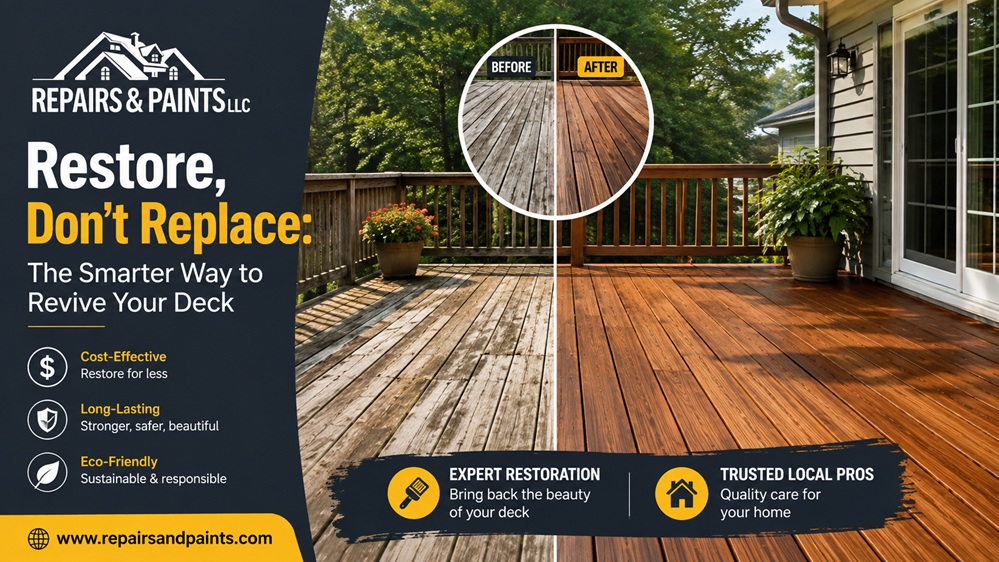
Why Deck Restoration Makes More Sense Than Replacement?
Complete deck replacement often becomes the first solution homeowners consider after noticing signs of wear. Although replacement is necessary for severely damaged structures, many decks only require targeted repairs and refinishing.
Restoration focuses on improving the existing structure instead of rebuilding it from the ground up.
This process typically includes:
- Structural inspection
- Board replacement where needed
- Fastener repairs
- Surface cleaning
- Sanding
- Minor carpentry repairs
- Staining or painting
- Protective sealing
When the supporting framework remains structurally sound, restoration delivers impressive results while significantly reducing project costs.
Professional deck repair services in South Jersey help homeowners preserve quality materials that still have years of useful life remaining.
Recognizing the Early Signs of Deck Damage
Outdoor structures naturally experience wear over time. Catching problems early often prevents larger repairs and protects your investment.
Some warning signs deserve immediate attention.
Fading and Discoloration
Constant UV exposure gradually breaks down protective finishes.
A deck that once displayed rich, vibrant color may begin looking dull, gray, or uneven. While fading often appears cosmetic, it frequently signals that the wood no longer has adequate protection from moisture and sunlight.
Splintering Wood
Wood fibers dry out after prolonged exposure to weather.
Splinters make the surface uncomfortable to walk on and indicate that the protective finish has worn away. Sanding and refinishing usually restore smoothness before more serious damage develops.
Loose Boards and Railings
Movement within deck boards or railings creates both safety concerns and structural stress.
Loose fasteners, shifting boards, or unstable handrails deserve prompt inspection before the damage spreads throughout the structure.
Cracked or Warped Boards
Seasonal expansion and contraction place continuous pressure on wood.
Small cracks often remain repairable, while neglected damage allows moisture to penetrate deeper into the lumber. Replacing isolated boards during restoration prevents widespread deterioration.
Peeling Paint or Stain
Protective coatings naturally wear down over time.
When paint or stain begins to peel, moisture can easily reach exposed wood. Restoring the finish before extensive weather damage develops helps extend the deck’s lifespan.
Surface Preparation Determines Long-Term Results
Many homeowners believe staining or painting alone restores a deck. In reality, the quality of the finished project depends largely on the preparation completed beforehand.
Applying fresh stain over dirt, mildew, peeling coatings, or damaged wood only hides problems temporarily.
Professional restoration begins with a detailed evaluation of the entire deck.
Preparation commonly includes:
- Removing dirt and debris.
- Washing away mildew and algae.
- Stripping loose coatings.
- Sanding rough surfaces.
- Replacing damaged boards.
- Tightening loose fasteners.
- Repairing railings.
- Filling minor imperfections.
Every step creates a clean, stable surface that allows protective coatings to bond properly.
Much like exterior house painting, careful preparation often determines how long the finished project lasts.
Why Cleaning Alone Isn’t Enough?
Pressure washing removes years of dirt, pollen, mold, and surface contaminants, although it represents only one step in the restoration process.
Cleaning improves appearance, yet it does not repair structural issues or restore weathered finishes.
A complete restoration addresses both cosmetic concerns and hidden damage.
Professionals inspect:
- Structural framing
- Stair connections
- Support posts
- Joists
- Ledger boards
- Railings
- Surface boards
This comprehensive approach ensures the deck remains both attractive and safe for everyday use.
Experienced Medford, NJ, painters and restoration professionals understand that lasting finishes depend on addressing the wood’s underlying condition before any stain or paint is applied.
Choosing Between Paint and Stain
Homeowners often ask whether paint or stain offers better protection.
The answer depends on the deck’s condition, appearance goals, and maintenance preferences.
Benefits of Staining
Stain enhances the natural beauty of wood while allowing its grain to remain visible.
It also:
- Penetrates deep into the wood.
- Resists peeling.
- Simplifies future maintenance.
- Provides UV protection.
- Helps reduce moisture absorption.
Transparent and semi-transparent stains work especially well on newer decks with attractive wood grain.
Benefits of Painting
Paint creates a durable surface coating that completely changes the deck’s appearance.
It offers:
- Excellent color variety.
- Strong moisture protection.
- Better coverage for older wood.
- A uniform finish.
- Increased resistance to weather exposure.
Paint often works well for older decks where the wood has already lost much of its natural appearance.
Selecting the right finish depends on the deck’s age, condition, and long-term maintenance expectations rather than appearance alone.
The Value of Routine Deck Maintenance
Restoration is not a one-time investment. Like every exterior feature of a home, decks perform best when they receive regular maintenance.
Simple habits help maximize the lifespan of both the wood and its protective finish:
- Sweep away leaves and debris regularly.
- Remove standing water after heavy rain.
- Clean mildew before it spreads.
- Inspect fasteners each season.
- Check railings for stability.
- Trim nearby vegetation to improve airflow.
- Reapply protective finishes when signs of wear appear.
Consistent maintenance often delays major repairs while preserving your deck’s beauty for many years.
Common Deck Restoration Mistakes Homeowners Make
Many homeowners enjoy tackling outdoor improvement projects themselves. While routine cleaning and minor maintenance are manageable, restoring a weathered deck requires careful planning and the right techniques. Small mistakes during the process often reduce the lifespan of the finished project.
Some of the most common restoration mistakes include:
- Skipping a thorough inspection before starting.
- Applying stain or paint over dirty surfaces.
- Ignoring loose boards or unstable railings.
- Failing to replace damaged wood.
- Using products designed for indoor applications.
- Applying stain before the wood dries completely.
- Overlooking weather conditions during application.
These shortcuts may save time initially, yet they often lead to peeling finishes, trapped moisture, uneven color, and expensive repairs later.
Professional deck repair in South Jersey follows a structured restoration process that addresses both cosmetic improvements and structural concerns. Every stage contributes to a safer deck and a finish that performs well through changing seasons.
Why Professional Repairs Deliver Better Results?
Deck restoration involves far more than sanding and applying a fresh coat of stain. Every deck has unique characteristics based on its age, construction, exposure to weather, and maintenance history.
Experienced professionals begin by evaluating the overall condition of the structure before recommending repairs or refinishing.
This assessment often identifies issues that homeowners may overlook, including:
- Hidden wood rot beneath surface boards
- Corroded fasteners
- Loose ledger boards
- Weak stair connections
- Moisture damage around support posts
- Early signs of structural movement
Addressing these concerns before refinishing helps extend the life of the entire structure rather than simply improving its appearance.
Professionals also understand how different wood species respond to cleaning products, sanding techniques, stains, and protective coatings. Their experience helps ensure a consistent finish that enhances both durability and appearance.
How Weather Affects Your Deck Throughout the Year?
Outdoor living spaces remain exposed to changing weather every day of the year.
In southern New Jersey, seasonal conditions continually affect wood surfaces.
- Spring often brings increased rainfall and moisture.
- Summer introduces prolonged UV exposure and heat.
- Autumn covers decks with leaves that trap moisture against the wood.
- Winter exposes surfaces to freezing temperatures, snow, and repeated freeze-thaw cycles.
These seasonal changes cause wood to expand and contract naturally. Without proper protection, small cracks gradually become larger openings that allow moisture to penetrate deeper into the structure.
Routine inspections, timely repairs, and protective finishes help minimize weather-related deterioration before major problems develop.
Experienced Medford, NJ, painters and restoration specialists understand these local conditions and recommend maintenance schedules that help homeowners protect their outdoor living spaces year-round.
How to Choose the Right Deck Restoration Professional?
Not every contractor approaches restoration with the same level of care. Selecting an experienced professional often determines the quality and longevity of the finished project.
When comparing contractors, homeowners should ask questions such as:
- What preparation steps are included?
- Will damaged boards be replaced if necessary?
- How do you inspect the deck’s structural condition?
- Which stains or coatings do you recommend?
- How long should the finish last with proper maintenance?
- Do you provide a detailed written estimate?
- Are you licensed and insured?
A qualified professional explains the restoration process clearly, recommends solutions based on the deck’s condition, and avoids unnecessary replacement when repairs provide a practical alternative.
Transparent communication helps homeowners understand exactly what the project includes before work begins.
Simple Maintenance After Restoration
A professionally restored deck remains attractive much longer with routine care.
Simple maintenance practices help preserve both the wood and its protective finish.
Consider the following habits:
- Sweep away leaves, dirt, and debris regularly.
- Wash the surface periodically using gentle cleaning products.
- Move outdoor furniture occasionally to prevent uneven wear.
- Keep planters elevated to reduce trapped moisture.
- Inspect railings and stairs every season.
- Remove snow carefully during winter without damaging the finish.
- Address minor scratches or worn areas before moisture reaches the wood.
Small maintenance efforts today often prevent major restoration projects tomorrow.
Restoration Protects More Than Your Deck
A well-maintained deck contributes to the overall health of your property.
Neglected wood often allows moisture to spread beyond the deck itself, affecting nearby trim, siding, doors, and foundations. Routine restoration helps reduce these risks while improving safety for everyone who uses the space.
Beyond structural protection, a restored deck enhances outdoor living by creating a clean, welcoming area for relaxing, entertaining, and spending time with family and friends.
Homeowners also benefit financially. Restoring an existing deck usually costs significantly less than replacing it, making timely maintenance one of the most cost-effective investments in homeownership.
Final Thoughts
A weathered deck does not always signal the need for complete replacement. In many cases, thoughtful repairs, careful preparation, and professional refinishing restore both its appearance and structural integrity while extending its lifespan for years.
From replacing damaged boards and tightening loose railings to sanding surfaces and applying high-quality protective finishes, every step plays a role in preserving your outdoor living space. Regular inspections and ongoing maintenance help prevent small issues from developing into major repairs.
When your deck begins to show signs of age, investing in professional deck repair services in South Jersey often delivers greater long-term value than starting over. Working with experienced Medford, NJ, painters and restoration professionals ensures your deck receives the attention, craftsmanship, and protection it needs to remain a safe, attractive extension of your home for many seasons to come.