
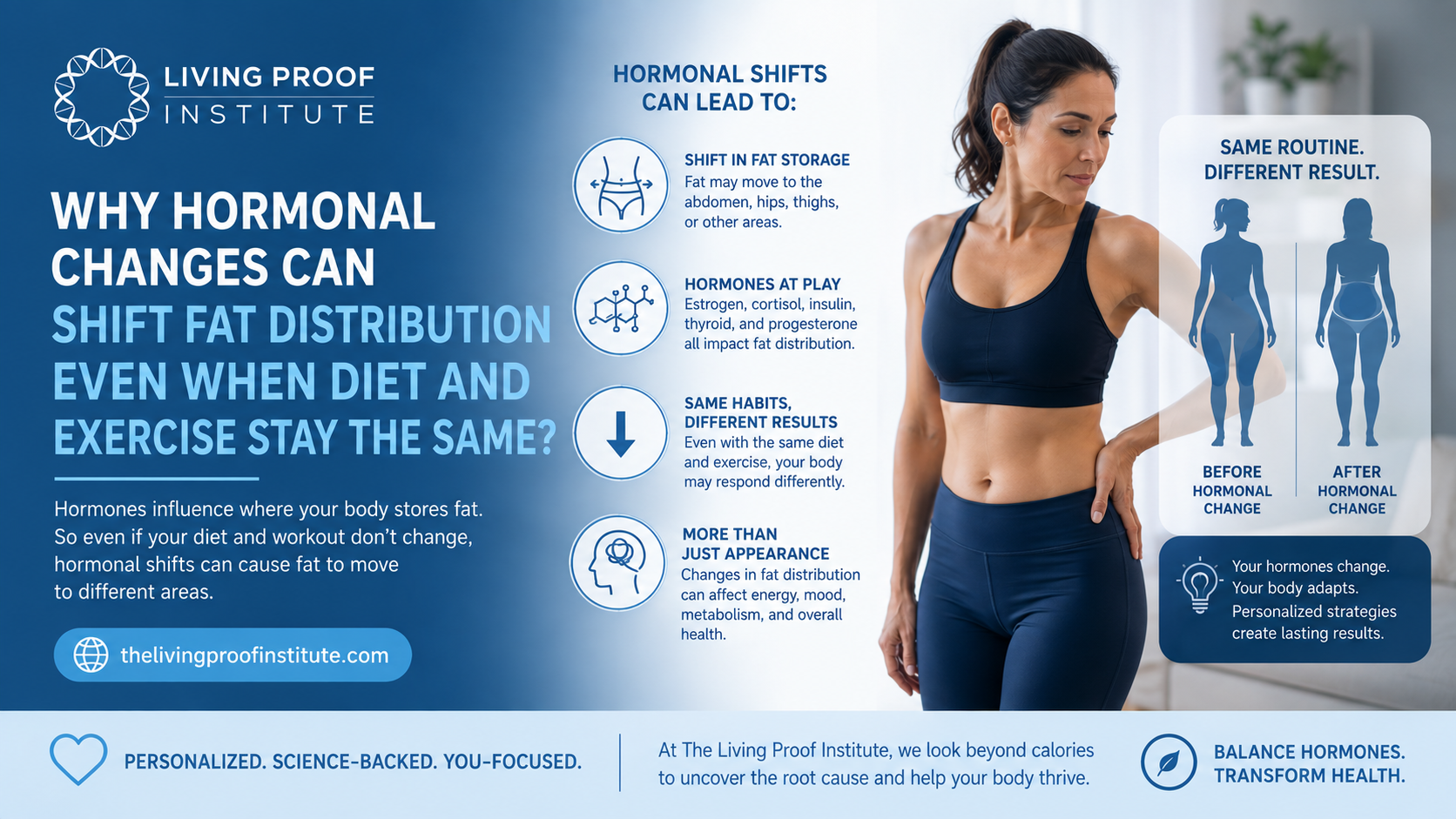
Why Hormonal Changes Can Shift Fat Distribution Even When Diet and Exercise Stay the Same?
A familiar pattern can leave even disciplined individuals questioning everything they know about weight management: the same meals, the same workouts, the same daily routine and yet, the body begins storing fat differently.
The scale may barely change, but the waistline expands. The abdomen becomes more prominent. Fat that once accumulated around the hips or thighs may appear more concentrated around the midsection. For some, weight becomes harder to lose despite maintaining habits that previously worked effectively.
This is not necessarily a failure of discipline. The body is not a static system. Hormonal fluctuations can change how fat is stored, mobilized, and metabolized, even when calorie intake and physical activity remain relatively stable. Understanding this shift is an important part of developing a more informed approach to balancing hormones for weight loss.
Hormones Help Determine Where the Body Stores Fat
Body fat distribution is influenced by several factors, including genetics, age, sex, muscle mass, insulin sensitivity, stress, sleep, and hormone levels. Hormones act as chemical messengers that influence appetite, metabolism, energy expenditure, and the activity of fat cells in different regions of the body.
This is why two people with similar body weights and eating patterns can have very different body compositions. It also explains why one individual may notice changes in fat distribution over time without making significant changes to their diet or exercise routine.
Fat cells located in different areas of the body do not behave identically. Abdominal fat, for example, has different metabolic characteristics from subcutaneous fat stored beneath the skin around the hips and thighs. Hormonal changes can influence how readily these fat stores release or retain energy.
As hormone levels shift, the body may gradually change its preferred storage patterns. The result can be a noticeable change in body shape, even when the scale does not show a dramatic difference.
Estrogen Changes Can Influence Fat Redistribution
Estrogen plays an important role in body fat distribution, particularly in women. During reproductive years, higher estrogen levels are generally associated with greater fat storage around the hips, thighs, and buttocks. As estrogen levels decline during perimenopause and menopause, the pattern of fat storage may change.
Many women notice a gradual increase in abdominal fat during this transition. This can happen even when eating habits and exercise routines remain largely unchanged.
The shift is not simply about consuming more calories. Changes in estrogen can affect insulin sensitivity, appetite regulation, energy expenditure, and the way fat tissue functions. Lower estrogen levels may also influence where the body preferentially stores fat.
This can create a frustrating experience: a routine that maintained body composition for years may no longer produce the same results. The solution is not necessarily more restriction or excessive exercise. Instead, it may require understanding the physiological changes occurring beneath the surface.
Cortisol and Chronic Stress Can Encourage Abdominal Fat Storage
Stress is another major factor that can affect fat distribution. When the body experiences stress, it activates hormonal systems designed to support short-term survival. Cortisol is one of the primary hormones involved in this response.
Short-term cortisol elevation is a normal physiological process. However, prolonged stress can contribute to changes in appetite, sleep quality, blood glucose regulation, and fat storage.
Chronic stress may also make abdominal fat more difficult to manage. In addition, stress often affects behaviors that indirectly influence body composition. Poor sleep can increase cravings, fatigue can reduce spontaneous movement, and emotional strain can make consistent nutrition more difficult.
This is where a comprehensive approach becomes important. Hormonal health is not only about food and exercise. Stress regulation, sleep, nervous system balance, and breathing patterns can all influence the physiological environment in which weight management occurs.
A qualified breathing coach may support individuals in developing structured breathing practices that promote relaxation and improve awareness of stress-related breathing patterns. While breathing exercises are not a substitute for medical treatment, better stress regulation may complement broader lifestyle and wellness strategies.
Insulin Can Affect Both Weight Regulation and Fat Storage
Insulin is another hormone that plays a central role in how the body handles energy. It helps move glucose from the bloodstream into cells, where it can be used for energy or stored.
When insulin sensitivity changes, the body may need to produce more insulin to achieve the same effect. Over time, this can influence hunger, energy levels, blood glucose regulation, and fat storage.
Insulin resistance is often associated with increased abdominal fat, although the relationship is complex and varies between individuals. Factors such as genetics, sleep, physical activity, stress, aging, and dietary patterns can all contribute.
Importantly, body weight alone does not reveal how effectively the body is managing glucose and insulin. A person can experience metabolic changes before noticing significant changes on the scale.
This is one reason that a weight-management strategy focused solely on calories may not fully address the underlying issue. A more complete evaluation may consider metabolic markers, hormone patterns, body composition, sleep, stress, and lifestyle factors together.
Thyroid Hormones Can Affect Energy Expenditure
Thyroid hormones help regulate metabolic rate and influence how the body uses energy. Changes in thyroid function can affect energy levels, body weight, temperature regulation, heart rate, and other physiological processes.
When thyroid hormone levels are altered, an individual may experience changes in energy expenditure that make previous weight-management strategies less effective. Fatigue can also make regular physical activity more difficult, creating a cycle in which reduced energy expenditure and hormonal changes overlap.
However, not every change in weight or body composition is caused by thyroid dysfunction. Symptoms can overlap with other conditions, and proper evaluation requires appropriate medical testing and professional interpretation.
The key point is that hormonal changes can alter the body’s energy-management system. When the physiology changes, maintaining the exact same routine may not necessarily produce the exact same outcome.
Age-Related Muscle Loss Can Change Body Composition
Hormonal changes often occur alongside age-related changes in muscle mass. Beginning in adulthood, individuals can gradually lose muscle mass if they do not actively support muscle preservation through resistance training and adequate nutrition.
Muscle tissue is metabolically active and contributes to overall energy expenditure. A reduction in muscle mass can change body composition, even if body weight remains relatively stable.
For example, an individual may lose some muscle while gaining fat, resulting in a similar number on the scale but a different physical appearance and fat distribution.
This is why the scale can sometimes provide an incomplete picture. Waist circumference, body composition, strength, energy levels, and metabolic health may reveal changes that body weight alone does not capture.
Resistance training, sufficient protein intake, adequate recovery, and appropriate medical guidance can all play a role in supporting healthy body composition as hormones change.
Why More Dieting May Not Solve the Problem?
When fat distribution changes, many people respond by cutting calories further or increasing exercise intensity. In some cases, these strategies may be appropriate. However, excessive restriction can create additional physiological and psychological stress.
Repeated dieting may contribute to cycles of weight loss and regain, changes in hunger signals, reduced adherence, and loss of lean mass. Extreme exercise without adequate recovery may also increase fatigue and stress.
The objective should not be to ignore nutrition or physical activity. These remain fundamental components of health. Rather, the goal is to recognize that the body’s response to these behaviors can change as hormonal conditions change.
A strategy that worked at age 25 may not be the most appropriate strategy at age 45. A person experiencing perimenopause, chronic stress, sleep disruption, insulin resistance, or thyroid changes may require a more individualized approach.
What a More Comprehensive Approach to Hormonal Weight Management Looks Like
Effective balancing hormones for weight loss is not about trying to manipulate one hormone through a single food, supplement, or quick fix. Hormonal systems are interconnected, and sustainable weight management often requires evaluating multiple contributing factors.
A comprehensive approach may include:
- Reviewing changes in body composition rather than focusing only on scale weight.
- Evaluating symptoms associated with hormonal transitions.
- Assessing sleep quality and duration.
- Examining stress levels and recovery.
- Supporting muscle mass through resistance training.
- Building nutrition strategies that support metabolic health.
- Reviewing relevant laboratory markers with a qualified healthcare professional.
- Identifying lifestyle factors that may influence insulin sensitivity and energy regulation.
Stress management can also be an important part of the process. Practices such as structured breathing, mindfulness, relaxation techniques, and adequate recovery may help support the body’s ability to respond to ongoing stress.
Working with a Breathing coach can be one option for individuals seeking structured support in developing breathing-based relaxation techniques as part of a broader wellness plan.
The Bigger Picture: Your Body May Be Adapting, Not Betraying You
Changes in fat distribution can feel confusing, particularly when a person believes they are doing everything the same way they always have. But the body is constantly adapting to changes in age, hormones, stress, sleep, muscle mass, and metabolic function.
The same diet and exercise routine can produce different outcomes at different stages of life because the internal environment has changed.
This does not mean that weight management is impossible. It means the strategy may need to evolve. Instead of responding to every change with more restriction, a more effective approach may involve understanding why the body is responding differently in the first place.
For individuals experiencing unexplained changes in body composition, persistent weight-management challenges, or symptoms associated with hormonal shifts, Breathing coach professional evaluation can help identify relevant factors. A personalized plan that considers nutrition, movement, stress regulation, sleep, and hormonal health may offer a more realistic path forward.
When the body changes its pattern of fat storage, the answer is not always to work harder. Sometimes, the more important question is whether the body’s internal signals have changed, and whether the strategy has changed with them.