
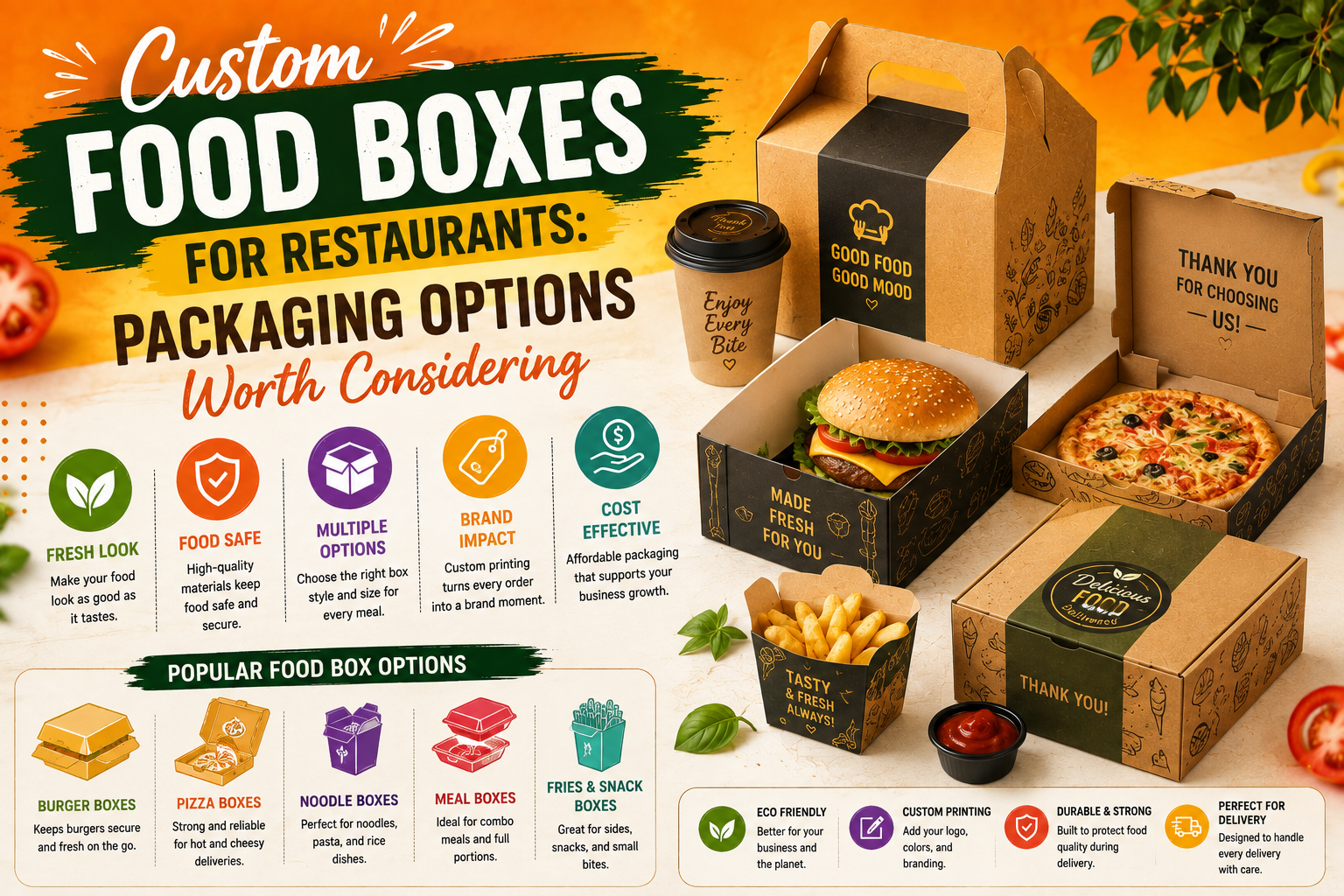
Custom Food Boxes for Restaurants: Packaging Options Worth Considering
For a restaurant, the food itself will always be the main attraction, but the packaging surrounding it can quietly shape the customer’s entire experience. A well-designed food box protects the meal, keeps the presentation intact, and gives the restaurant another opportunity to make an impression.
This becomes especially important with takeaway and delivery orders. Customers may never see the kitchen or dining area, but they will see the box sitting in front of them. If it looks thoughtful, sturdy, and consistent with the restaurant’s identity, it can make the order feel more professional.
That is where custom food boxes come into the picture. Rather than relying on generic packaging, restaurants can choose boxes according to their menu, portion sizes, branding needs, and serving style.
The Right Box Starts With the Food Inside It
There is no single food box that works equally well for every restaurant. A burger, a slice of cake, fried chicken, and a full family meal all have different packaging requirements.
A burger box needs enough room to prevent crushing while keeping the food secure during transport. A bakery may need boxes that showcase the product without compromising protection. Restaurants selling saucy or moisture-heavy meals need packaging that can handle the contents without becoming weak or messy.
Before choosing a design, it helps to look closely at what the restaurant actually sells. The shape, weight, temperature, moisture, and portion size of the food should all influence the box selection.
Kraft Boxes Keep Things Simple and Practical
Kraft food boxes remain a popular option for restaurants that want a clean and uncomplicated appearance. Their natural brown finish can give packaging a warm, casual character, while the surface also works well with simple logos and printed details.
They can be used for everything from sandwiches and bakery items to snacks and takeaway meals. Restaurants that want a more understated look may prefer kraft packaging because it does not need excessive graphics to stand out.
Another advantage is the flexibility of the design. A restaurant can keep the box relatively minimal or add its logo, brand colors, contact details, and other information without making the packaging feel overcrowded.
Printed Boxes Turn Takeaway Orders Into Brand Moments
A plain box does its job, but a printed box can do something extra: remind customers where their food came from.
Custom printing gives restaurants space to create packaging that feels connected to the brand. A recognizable logo, distinctive colors, a short message, or even a particular illustration style can make the box more memorable.
This matters because takeaway packaging often travels beyond the restaurant. It may be carried through an office, placed on a family dining table, or photographed before the food is opened. When the packaging looks distinctive, the restaurant gets additional visibility without needing another advertising surface.
The key is restraint. Good restaurant packaging does not need to be covered in information. A clear visual identity is usually more effective than trying to put every detail on the box.
Window Boxes Let the Food Do the Talking
For restaurants, bakeries, dessert shops, and cafés where appearance is part of the selling point, window boxes can be worth considering.
A transparent section allows customers to see the product without opening the package. This can be particularly useful for pastries, cupcakes, cookies, desserts, sandwiches, and other foods where presentation matters.
The window also creates a small sense of anticipation. Instead of wondering what is inside, the customer can immediately see the product. For food businesses that put considerable effort into presentation, hiding everything inside an opaque box may not make much sense.
Boxes With Compartments Bring Order to Mixed Meals
Some restaurant orders contain several items that are better kept apart. Sauces, sides, toppings, snacks, and different components of a meal can easily move around during delivery.
Compartment-style packaging can help solve this problem by giving each component its own space. It can make the meal easier to organize and may reduce unwanted contact between foods.
This type of packaging can be particularly useful for combination meals, lunch boxes, catering portions, and restaurant concepts where several elements are served together.
The important thing is not to add compartments simply because they look useful. Extra sections can increase packaging size and cost. They should serve a genuine purpose based on the restaurant’s menu.
Folding Boxes Make Storage Easier Behind the Counter
Restaurant packaging has to work before the customer even sees it. Staff need to store boxes, assemble them quickly, and use them during busy service periods.
Foldable food boxes can be helpful because they can often be stored flat and assembled when needed. This can make better use of storage space, especially in smaller kitchens where every shelf matters.
For busy restaurants, assembly should also be considered. A beautiful box that takes too long to put together can slow down operations during peak hours. Packaging should support the workflow rather than become another task that staff have to fight with.
Grease Resistance Matters More Than Fancy Finishes
A food box can look excellent when it is empty and still fail once a hot, oily meal goes inside.
Grease resistance is therefore one of the practical details restaurants should pay attention to when selecting packaging. Foods such as fried chicken, burgers, fries, and other oily meals can quickly affect unsuitable materials.
Moisture is another concern. Steam from hot food can create condensation inside the package, potentially affecting texture and weakening certain types of packaging.
For that reason, restaurants should evaluate packaging under realistic conditions. It is better to test a box with an actual menu item than to judge it only by appearance.
Size Should Follow the Portion, Not the Other Way Around
Oversized packaging may seem harmless, but it can allow food to move around during delivery. A box that is too small can compress the food and ruin its presentation.
The goal is to find a practical fit.
Restaurants should consider the dimensions of the food after preparation, including toppings, sauces, garnishes, and anything else that affects its final size. If the meal needs to be carried or stacked, those factors should also be taken into account.
A properly sized box can make the food look more presentable while reducing unnecessary packaging material.
Sustainable Packaging Is Becoming Part of the Restaurant Conversation
Customers increasingly notice what happens to packaging after the meal is finished. That has made material selection an important consideration for many food businesses.
Restaurants may explore paper-based, recyclable, compostable, or other packaging options depending on their menu, budget, local disposal facilities, and packaging requirements.
However, sustainability should not be treated as a label alone. A box is only useful if it performs well for the food it carries. If packaging fails during delivery and causes food waste, the overall result may be less practical than expected.
The better approach is to consider both environmental impact and real-world performance before making a decision.
A Small Box Can Carry a Lot of Brand Personality
Custom packaging does not always require an elaborate design. Sometimes the smallest details create the strongest impression.
A restaurant might use a particular color across all its boxes, print a short thank-you message inside the lid, add a social media handle, or use a distinctive pattern that customers begin to associate with the brand.
These details can make packaging feel intentional rather than generic.
For independent restaurants and growing food brands, that consistency can be especially valuable. When the same visual language appears on the menu, website, storefront, delivery packaging, and social profiles, customers are more likely to recognize the business across different touchpoints.
Packaging Should Survive the Journey, Not Just Look Good on the Counter
Delivery puts food packaging through a different kind of test. Boxes may be carried in bags, stacked with other orders, moved between vehicles, and exposed to temperature changes.
That means structural strength matters.
A restaurant should consider how the box behaves when filled, closed, stacked, and transported. The lid should stay secure, the base should support the food, and the overall construction should be suitable for the weight of the order.
A visually attractive package that arrives damaged can quickly turn a positive food experience into a disappointing one.
The Best Custom Food Box Is the One That Fits the Whole Operation
Choosing restaurant packaging is not simply a design exercise. It involves balancing food protection, appearance, storage, staff workflow, customer expectations, and cost.
A restaurant selling burgers may benefit from sturdy printed boxes. A bakery may find window packaging more suitable. A café could prefer compact kraft boxes, while a restaurant serving combination meals might need compartment-style designs.
The right choice depends on the menu and the way orders move through the business.
Custom food boxes are worth considering because they allow restaurants to move away from one-size-fits-all packaging. With the right combination of material, size, construction, and branding, the box can protect the meal while becoming a natural extension of the restaurant itself.
Final Thoughts
In the end, good packaging should accomplish three things without unnecessary complication: keep the food in good condition, make the customer’s experience better, and represent the restaurant in a way that feels authentic. When those three elements come together, even a simple takeaway box can become a meaningful part of the dining experience.