
Bar Bending Machine Buying Guide: Features, Capacity, and Performance
Learn how to choose the right bar bending machine by comparing capacity, features, accuracy, speed, durability, and performance. Make the right choice today!
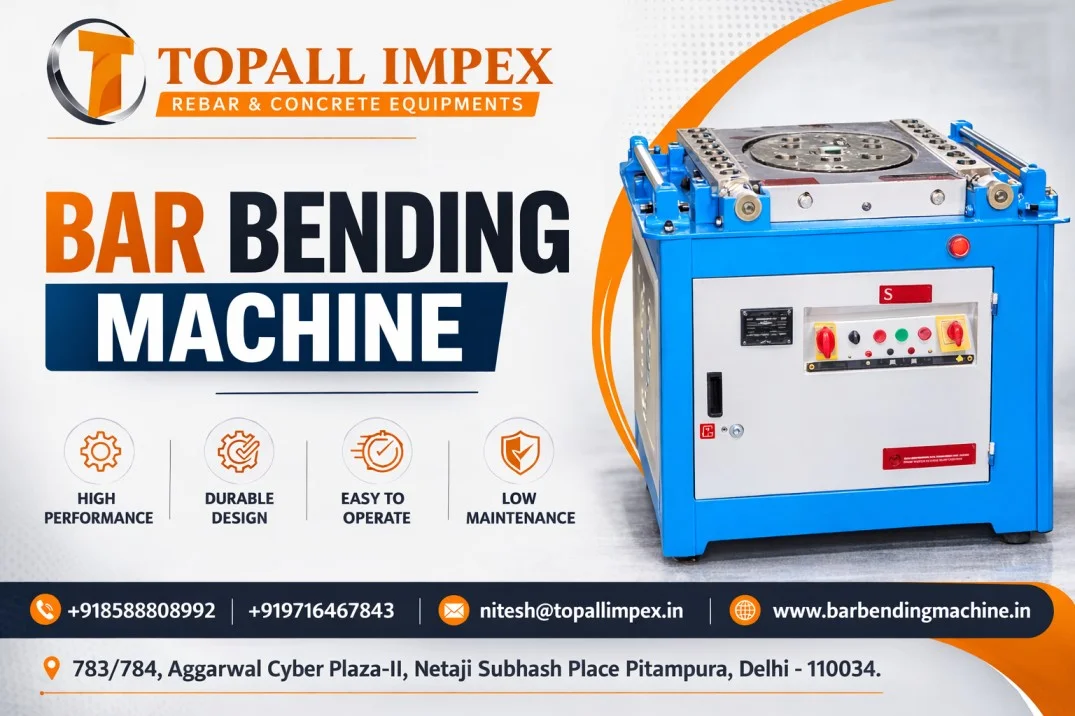
A bar bending machine is an important piece of equipment for construction companies, reinforcement contractors, steel fabricators, and infrastructure projects. It is designed to bend reinforcement bars into specific angles and shapes with greater speed, accuracy, and consistency than manual bending methods.
Choosing the right machine, however, requires more than comparing prices. A machine that performs well for a small construction project may not be suitable for a high-volume infrastructure application. Factors such as bending capacity, motor power, automation, operating speed, accuracy, durability, maintenance requirements, and after-sales support all influence the machine’s overall value.
This bar bending machine buying guide explains the key features, capacity considerations, and performance factors you should evaluate before making a purchase.
1. Understand Your Rebar Bending Requirements
Before selecting a machine, determine exactly what type of reinforcement work you handle. Consider the diameter and grade of bars you normally process, the shapes and angles required, and your expected daily production volume.
For example, a contractor handling small residential projects may have different requirements from a company working on bridges, highways, industrial structures, or large commercial buildings.
Understanding your application helps prevent two common purchasing mistakes: buying a machine that is too small for your requirements or paying for excessive capacity that you will rarely use.
2. Check the Bending Capacity
One of the most important specifications is bar bending capacity. The machine should be capable of handling the maximum diameter of reinforcement bars used in your projects.
Check the manufacturer’s stated bending range and confirm whether the capacity applies to different bar grades and configurations.
A machine with insufficient capacity may struggle with larger bars, resulting in slower production, excessive machine stress, or poor bending quality. On the other hand, selecting an appropriately sized machine allows you to maintain consistent performance without unnecessarily increasing your investment.
Always choose capacity based on your current requirements as well as reasonably expected future needs.
3. Evaluate Bending Accuracy
Precision is critical in reinforcement work. Rebars must often be bent according to structural drawings and specific dimensions. Inaccurate bends can cause installation problems, material wastage, and costly rework.
A quality bar bending machine should provide consistent bending angles and repeatable results. Machines with accurate controls can help operators achieve the required specifications more reliably.
When comparing machines, ask about angle control, repeatability, adjustment systems, and the machine’s performance under continuous operation.
4. Consider Machine Speed and Productivity
Production speed directly affects construction schedules. A machine that can process reinforcement bars quickly can help reduce preparation time and improve overall project productivity.
However, maximum speed should not be considered independently of accuracy. A machine that operates quickly but produces inconsistent bends may create additional rework.
Look for a machine that combines speed, precision, and reliable operation. If your business processes large quantities of rebar, production capacity should be one of the key factors in your purchasing decision.
5. Look at Motor Power and Drive System
Motor performance affects the machine’s ability to handle reinforcement bars efficiently. Adequate motor power is particularly important when working with larger or higher-strength bars.
Review the motor specifications, drive mechanism, power requirements, and expected operating conditions. A well-designed drive system should provide smooth and consistent bending without placing unnecessary stress on the machine.
It is also important to consider the availability of replacement electrical and mechanical components in your region.
6. Decide Between Manual, Automatic, and CNC Options
Bar bending machines are available with different levels of automation.
Manual or basic machines may be suitable for applications with relatively low production requirements. They can offer straightforward operation and lower initial investment.
Automatic bar bending machines can improve productivity by reducing manual intervention and providing more consistent operation.
CNC bar bending machines offer advanced control and can be useful for complex, repetitive, or high-volume bending requirements where precision and programmable operation are important.
The right choice depends on production volume, project complexity, workforce availability, and budget.
7. Check Build Quality and Durability
Construction environments can be demanding. Machines may be exposed to dust, steel debris, vibration, and continuous workloads.
Therefore, build quality should be an important consideration. Examine the frame construction, bending components, gears, electrical system, control panel, and other critical parts.
A durable machine can provide more reliable service and may have a longer working life when properly maintained.
Instead of focusing only on the purchase price, consider the machine’s expected total cost of ownership over several years.
8. Consider Ease of Operation
A machine with complicated controls can increase training requirements and make daily operation less efficient.
Look for user-friendly controls, clear settings, accessible components, and straightforward operating procedures. Digital controls or programmable systems can be especially useful when operators need to produce different bending patterns regularly.
Safety features should also be evaluated. Emergency stop systems, protective components, and appropriate machine guarding can contribute to safer operation.
9. Evaluate Maintenance Requirements
Regular maintenance helps protect machine performance and service life. Before purchasing, find out what maintenance procedures are required and how frequently they should be performed.
Important areas may include lubrication, inspection of moving components, electrical checks, cleaning, and replacement of wear parts.
A machine designed for easy maintenance can reduce servicing time and help minimize unnecessary downtime.
Ask the supplier about maintenance schedules, recommended lubricants, replacement parts, and technical support.
10. Don’t Ignore After-Sales Service
After-sales support can make a significant difference in the long-term performance of your investment.
Even a high-quality machine may eventually require technical assistance or replacement parts. A supplier with dependable support can help reduce downtime and resolve operational problems more quickly.
Before purchasing, check the warranty terms, availability of spare parts, technician support, installation assistance, and operator training.
A lower-priced machine from a supplier with limited support may ultimately cost more if repairs take longer or spare parts are difficult to obtain.
11. Compare Price With Overall Value
Price is naturally an important factor, but it should not be the only deciding factor.
When comparing machines, consider:
- Purchase price
- Bending capacity
- Production speed
- Accuracy
- Motor and drive performance
- Automation level
- Maintenance costs
- Spare parts availability
- Warranty
- Expected service life
- After-sales support
A machine with a slightly higher initial price may provide better long-term value if it delivers higher productivity, lower downtime, and greater durability.
12. Check Electrical and Installation Requirements
Before ordering a machine, confirm that your construction facility has the appropriate electrical supply and installation conditions.
Review voltage, power consumption, phase requirements, floor space, machine dimensions, and operating environment. Proper installation is essential for safe and reliable operation.
The supplier should provide clear installation and commissioning requirements so that the machine can be integrated into your production area efficiently.
13. Think About Future Requirements
Your business requirements may grow over time. If you expect to handle larger projects or higher quantities of reinforcement steel, consider a machine that provides some additional capacity.
However, avoid significantly over-specifying the machine simply for future possibilities. The goal is to find a practical balance between current production requirements, expected growth, investment budget, and operating costs.
Conclusion
Buying a bar bending machine is a significant investment, and choosing the right model requires careful evaluation. Capacity, bending accuracy, speed, motor performance, automation, build quality, maintenance, safety, and after-sales support all play an important role in determining machine performance.
The best bar bending machine is not necessarily the most expensive or the fastest model. It is the machine that matches your rebar requirements, production volume, operating environment, and long-term business goals.
By evaluating features, capacity, performance, and total cost of ownership before purchasing, construction companies can select a machine that improves productivity, reduces rework, minimizes downtime, and delivers reliable performance for years to come.