
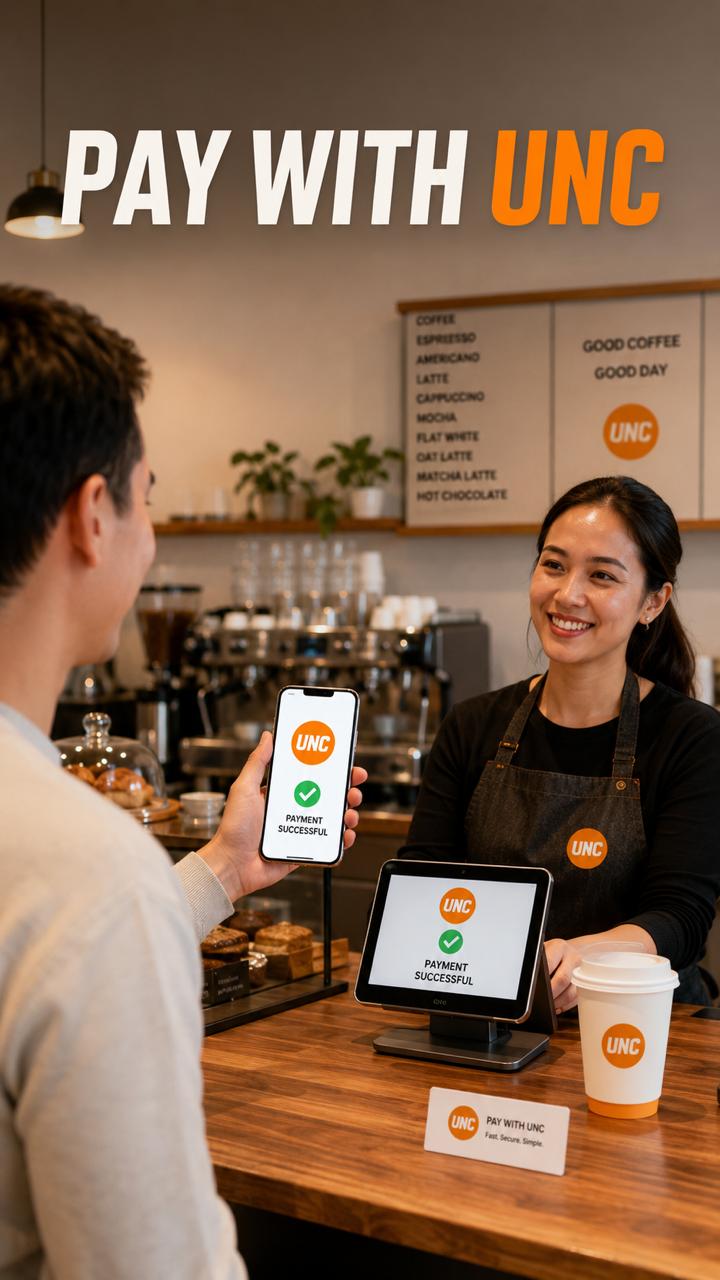
Mine Cryptocurrency On Your Mobile: A Beginner’s Guide to Mobile Crypto Mining
Cryptocurrency mining has traditionally been associated with powerful computers, specialized hardware, high electricity consumption, and technical expertise. But the rise of mobile-first blockchain projects has introduced a simpler way for everyday users to participate in cryptocurrency ecosystems.
Today, people can mine cryptocurrency on your mobile—or, more accurately, participate in mobile-based cryptocurrency reward networks—without purchasing expensive mining equipment or running energy-intensive hardware.
One project exploring this approach is UNC, a mobile-first cryptocurrency network designed around verified human participation rather than traditional computational mining.
What Does “Mine Cryptocurrency On Your Mobile” Really Mean?
Traditional cryptocurrency mining, particularly proof-of-work mining, requires computers to perform large numbers of cryptographic calculations. Specialized mining hardware can perform these calculations far faster than smartphones.
Mobile cryptocurrency projects can use a different model.
UNC explains that its mobile system does not make the smartphone perform traditional cryptographic hashing. Instead, users open the app and start a daily session that verifies that a real person is actively participating. UNC then distributes tokens based on participation.
This distinction is important because a mobile mining application should not necessarily be confused with running a Bitcoin mining operation directly on a smartphone.
How Mobile Cryptocurrency Mining Works
The concept is designed to be straightforward.
Instead of buying a mining rig, users can participate through a mobile application. With UNC, the basic process involves three steps:
- Download the mobile application.
- Create an account and set up your wallet.
- Start a mining session from your phone.
According to UNC’s website, the platform is currently available on Android through Google Play, while an iOS version is in development.
This makes participation accessible to people who may not have technical knowledge or access to specialized cryptocurrency mining hardware.
Does Mobile Mining Drain Your Battery?
This is one of the most common questions people ask about mobile cryptocurrency mining.
Traditional computational mining can place significant loads on a device because the processor is continuously performing calculations. That can generate heat and consume substantial battery power.
UNC uses a different approach. The company states that its mobile sessions use a lightweight proof-of-liveness mechanism rather than continuous hashing on the phone. As a result, the phone is not being used as a traditional mining computer.
This approach is intended to make participation practical for everyday smartphone users.
Why Are People Interested in Mobile Cryptocurrency?
Accessibility is one of the biggest reasons.
Traditional cryptocurrency mining may require:
- Specialized hardware
- Technical configuration
- Electricity
- Cooling
- Maintenance
- Significant upfront investment
A mobile-first participation model removes many of these barriers.
Users can participate using a device they already own. For someone who wants to explore blockchain technology without immediately purchasing mining equipment, mobile cryptocurrency applications can provide an accessible introduction.
UNC: A Mobile-First Cryptocurrency Network
UNC describes itself as a cryptocurrency network built around verified people rather than traditional mining hardware.
The platform uses daily participation, identity verification, streaks, and referrals as components of its reward model. Users begin with a base mining rate, while active referrals can increase that rate through multiple referral tiers.
The platform also describes additional ecosystem features, including staking, daily missions, streak multipliers, and a developer API.
This creates an ecosystem that goes beyond simply opening an app and watching a balance increase.
Building Consistency With Daily Sessions
One feature of mobile participation is the emphasis on consistency.
UNC allows users to build a mining streak by participating each day. According to the platform, reaching a 30-day streak can double the base mining rate. Missing a day resets the streak multiplier, while the accumulated balance and referral tiers remain unaffected.
This type of system encourages regular participation without requiring users to keep their phones performing intensive computations throughout the day.
Referral Rewards and Community Growth
Community participation is another important part of UNC’s model.
Users can invite other people to join the network. Active referrals can increase the user’s hourly mining rate, with multiple referral milestones available.
UNC currently describes eight referral tiers, beginning with one active referral and extending to 1,000 or more active referrals. The stated maximum referral-based rate is 0.46 UNC per hour.
Referral systems can help blockchain communities grow organically by encouraging existing participants to introduce new users to the network.
Is Mobile Cryptocurrency Mining the Same as Traditional Mining?
No.
This is an important distinction for anyone researching how to mine cryptocurrency on your mobile.
Traditional proof-of-work mining involves computational work. Mining machines compete to solve cryptographic problems and help secure a blockchain.
UNC explicitly states that its mobile system does not perform this computational mining on the user’s smartphone. Instead, it uses verified participation and distributes tokens to participating users.
Understanding this difference can help users avoid unrealistic expectations about what a mobile cryptocurrency application is actually doing.
What Is the Current Value of UNC?
Users should also understand the project’s current development stage.
UNC states that it is currently pre-mainnet. According to the project, accumulated balances are pending allocations that are intended to convert to on-chain UNC when mainnet launches.
At present, the project states that UNC has no market price and cannot be sold, exchanged, or converted into cash. The website also makes clear that there is no guarantee that the token will have future value.
That makes it important for users to view participation as involvement in an emerging cryptocurrency project rather than guaranteed income.
How to Get Started
For users interested in exploring mobile cryptocurrency participation, getting started with UNC is designed to be simple.
The process is:
Download → Create an Account → Start a Session
After creating an account, users can start a mining session from their mobile device and monitor their accumulated UNC balance.
UNC also recommends security features such as two-factor authentication and biometric account protection.
As with any cryptocurrency-related service, users should protect their account credentials and never share passwords, PINs, recovery information, or one-time security codes with anyone claiming to provide support.
Final Thoughts
The idea of being able to mine cryptocurrency on your mobile represents a major shift from the traditional image of cryptocurrency mining.
While smartphones are not a practical replacement for specialized proof-of-work mining hardware, mobile-first cryptocurrency networks can create another way for ordinary users to participate in blockchain ecosystems.
UNC takes this approach by focusing on verified human participation rather than computational hashing. Its model is designed around daily sessions, community participation, referral rewards, and an expanding cryptocurrency ecosystem.
For anyone exploring mobile cryptocurrency, the most important step is understanding exactly how a particular platform works. Look beyond the word “mining,” examine the reward mechanism, understand the project’s development stage, and never assume that cryptocurrency rewards are guaranteed to have monetary value.
Mobile participation can be an interesting way to explore the cryptocurrency ecosystem—and projects such as UNC are demonstrating how blockchain participation can be designed around people rather than expensive mining machines.