
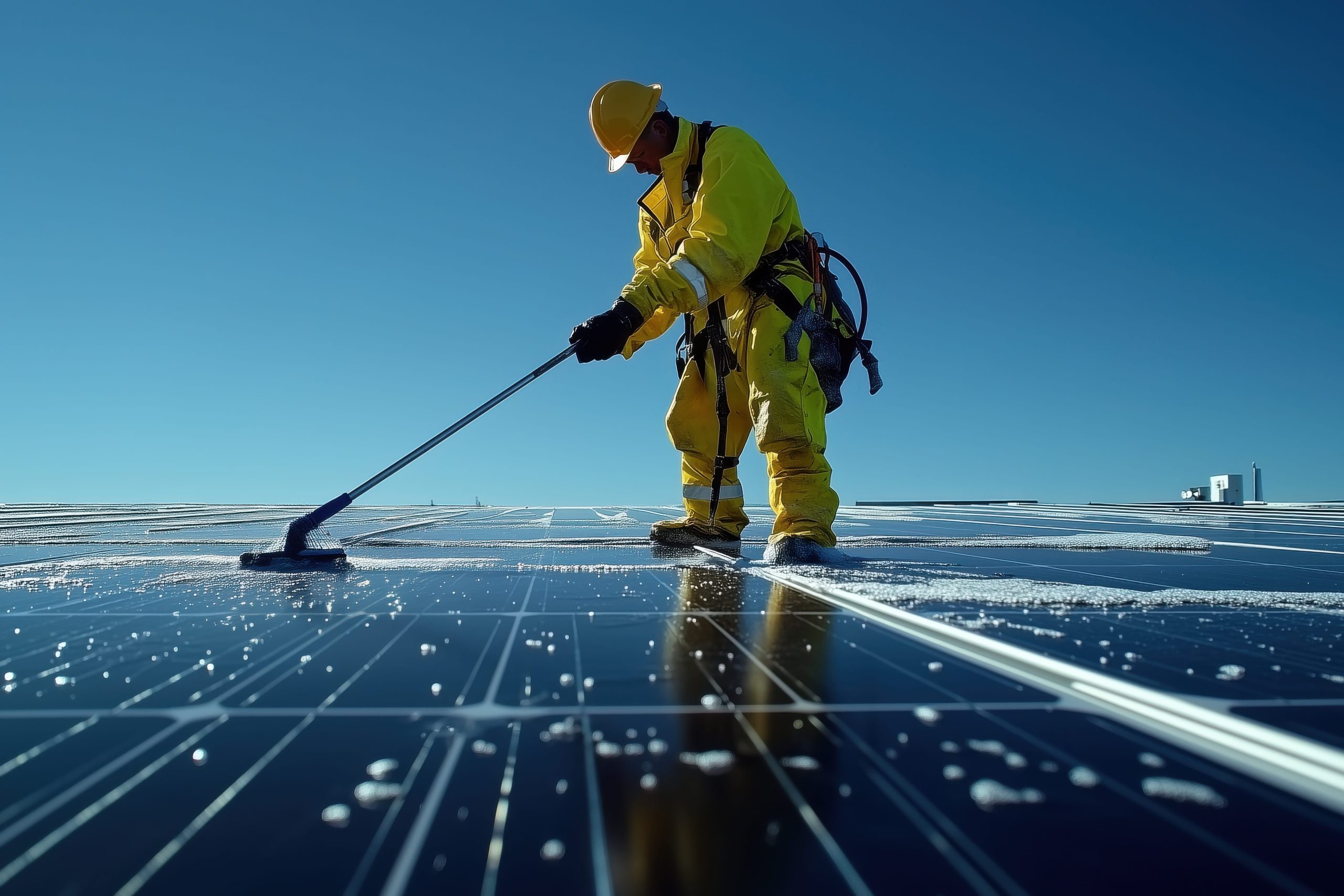
Solar Panel Cleaning in Askari: What a Proper Service Covers
A rooftop array can look clean from the driveway while a thin film of dust is still muting its output. Solar Panel Cleaning in Askari is mainly about removing the dirt that blocks light without scratching glass, forcing moisture into electrical parts, or creating a new safety risk on the roof.
For homeowners in Lahore’s Askari communities, the real question is what a careful service checks, how it handles local dust, and when cleaning should give way to fault diagnosis.
What a proper service should include
A proper solar-panel cleaning visit is a controlled maintenance task, not a quick rinse. It should combine a visual inspection, safe access, low-pressure washing, residue-free drying where needed, and a clear note of any condition that needs electrical attention.
The first job is to inspect the array before water touches it. A technician should look for hard bird-dropping patches, leaf buildup around frame edges, damaged glass, loose-looking clamps, exposed cabling, and pooled water near the mounting area. Cleaning cannot repair cracked glass or a failed inverter, but it can reveal hidden problems.
The cleaning method matters more than the amount of water used. Soft brushes, microfiber contact surfaces, and filtered or low-mineral water reduce the risk of dragging grit across the glass. Strong detergent, abrasive pads, and high-pressure jets have no business on the panel face. A decent visit also avoids spraying junction boxes, cable connectors, inverter housings, and roof penetrations.
For people searching solar panel cleaning askari, this is the benchmark: protect the module, roof surface, and electrical system together. If nobody asks about access, water source, or visible defects, the scope is too thin.
Why Askari rooftops need a practical cleaning routine
Dust is the main reason rooftop solar performance needs attention in Lahore, but it is rarely the only reason. Fine dust, roadside pollution, construction residue, tree debris, birds, and damp-weather residue can form a layer that ordinary rain does not fully remove.
Solar Panel Cleaning in Askari should be timed around actual soiling, not a random calendar promise. A home near a busy approach road, an active construction site, mature trees, or open plots may need inspection more often than a sheltered roof with clear exposure. In practice, looking at the panel surface every four to six weeks is more useful than assuming all homes have the same cleaning cycle.
The visual pattern tells you a lot. Even grey film usually points to airborne dust, while small dark spots often indicate bird droppings. A dirty lower edge can mean runoff is carrying grit there. One panel that stays markedly cleaner or dirtier than the rest can expose a shade line, drain outlet, or nearby branch.
This is where solar system cleaning becomes more than cosmetic work. The goal is to restore an even, light-receiving surface across the array while checking whether the same dirt problem keeps returning from a fixable source. Trimming an overhanging branch or redirecting a roof drain can reduce repeat buildup better than another rushed wash.
How panels should be cleaned safely
The safest method is simple: isolate the work area, let hot panels cool if needed, remove loose debris gently, wash with suitable water and soft equipment, then inspect the finished surface. The process should be deliberate because a solar array mixes glass, aluminium frames, wiring, and roof access in one exposed location.
Cleaning during the coolest practical part of the day reduces fast evaporation and makes streaks easier to see. Water flashing off hot glass can leave mineral marks, especially with hard water. A clean panel should dry without a chalky film or detergent smears.
Roof safety is not optional. The person cleaning should have stable access, appropriate footwear, and a plan for moving hoses without catching cables or dislodging roof tiles. Panels are not walkways. Standing, kneeling, or placing heavy buckets on them can crack cells or stress the frame, even when the damage is not obvious immediately.
AfinitySolar treats cleaning and visual inspection as one maintenance visit because separating them makes little sense on a rooftop. The cleaner is already close enough to notice frame damage, loose debris, or unusual staining. Still, a visual inspection is not an electrical diagnosis; warning lights, repeated generation drops, or inverter error codes need a qualified solar technician.
What should you ask before selecting a service?
Ask about method, water quality, access, and inspection scope before judging a service by price. A clear answer to those four points says more about standards than a vague promise of spotless panels.
Start with the equipment list. Soft-bristle brushes, non-abrasive pads, hose control, and low-pressure water are appropriate. The phrase solar panel cleaning kit can describe anything from a basic home brush to a professional pole system, so ask what touches the glass and whether the brush is kept free of grit between jobs. Dirty tools can turn a cleaning visit into a scratching session. Not cute.
Next, ask how the team handles roof edges, skylights, waterproofing, cable runs, and panel gaps. In Lahore, many residential roofs have mixed surfaces, water tanks, pipework, and uneven access points. A provider who ignores those details may finish quickly, but speed is not the same as control.
A useful service report can be short: date, visible soiling, defects noticed, panels needing follow-up, and a recheck window. That is enough to tell whether the job was routine maintenance or an ongoing issue.
Why pressure washing is the wrong shortcut
High-pressure washing is not a solar-panel cleaning method. It can push water into vulnerable areas, disturb seals, damage roof finishes, and force grit across glass.
A search for power washing companies near me can make sense for driveways, boundary walls, and external paving. It is not a reliable route to a solar-cleaning specialist unless the provider clearly states that it uses low-pressure, panel-safe procedures. A pressure washer set too aggressively can damage more than it cleans, especially near frame joints, roof flashing, and exposed cable routing.
Harsh chemical cleaners are another avoidable mistake. Most ordinary surface grime can be removed with water and a soft mechanical action. Strong degreasers, abrasive powders, and household glass cleaners may leave films, attack seals, or create streaking that makes the array look worse in direct sun.
Homeowners should also avoid dry dusting. Wiping a dusty module with a dry cloth drags fine particles across the surface. If you must remove a fresh droppings mark between scheduled visits, soften it first with clean water, use a very soft cloth, and do not lean weight onto the panel.
How often should panels be cleaned in Askari?
Most Askari homes benefit from condition-based cleaning rather than a fixed monthly booking. Inspect the array every four to six weeks, then clean when the surface shows enough dust, droppings, residue, or uneven staining to justify the roof work.
For a typical unobstructed residential array, two to four thorough cleanings a year may be reasonable, but the right frequency depends on the property. A roof beside an unpaved plot or regular construction traffic may need more attention. A cleaner roof with limited bird activity may need less. The panel surface and production trend should lead the decision, not a generic package.
Solar Panel Cleaning in Askari is especially useful after a spell of dry, dusty weather or after rainfall leaves visible residue rather than a clean finish. Check the system’s monitoring app before and after cleaning under similar daylight conditions. A single day is not a perfect performance test because cloud cover and temperature vary, but a continuing gap after cleaning can signal shade, wiring, inverter, or module issues rather than dirt.
Photograph the array before cleaning, note stubborn deposits, and save daily-generation screenshots for a few comparable days. That record reduces guesswork and makes future maintenance decisions easier.
Common questions homeowners ask
Can rain clean solar panels properly?
Rain can rinse loose dust, but it often leaves fine particles, pollution residue, and dried mineral marks behind. Rainwater does not remove hardened droppings, stuck leaves, or oily grime near roadside areas.
Can I clean panels with a household detergent?
Usually, no. Plain clean water with a soft, non-abrasive tool is the safer starting point. Use a manufacturer-approved cleaner only where it is genuinely needed and follow the product directions exactly.
Should cleaning fix a sudden major drop in solar output?
Not necessarily. Dirt can reduce light reaching the cells, but a sharp or persistent output drop may also point to shade, a tripped breaker, an inverter alert, a loose connection, or a damaged module. Cleaning should not be used as an excuse to ignore a fault.
Does every panel need the same cleaning frequency?
No. The right interval depends on the roof’s dust exposure, bird activity, surrounding trees, nearby construction, and the type of deposits visible on the panels. Condition-based checks are more accurate than one rigid schedule.
A clean solar array is not automatically a healthy solar array, but it gives the system a fair chance to perform as designed. Solar Panel Cleaning in Askari works best when careful washing, visual inspection, and simple production tracking are treated as one routine rather than separate chores.
For Lahore homeowners, that routine is straightforward: inspect the surface regularly, avoid pressure and harsh chemicals, clean only with panel-safe methods, and investigate any performance problem that remains after the glass is clear.