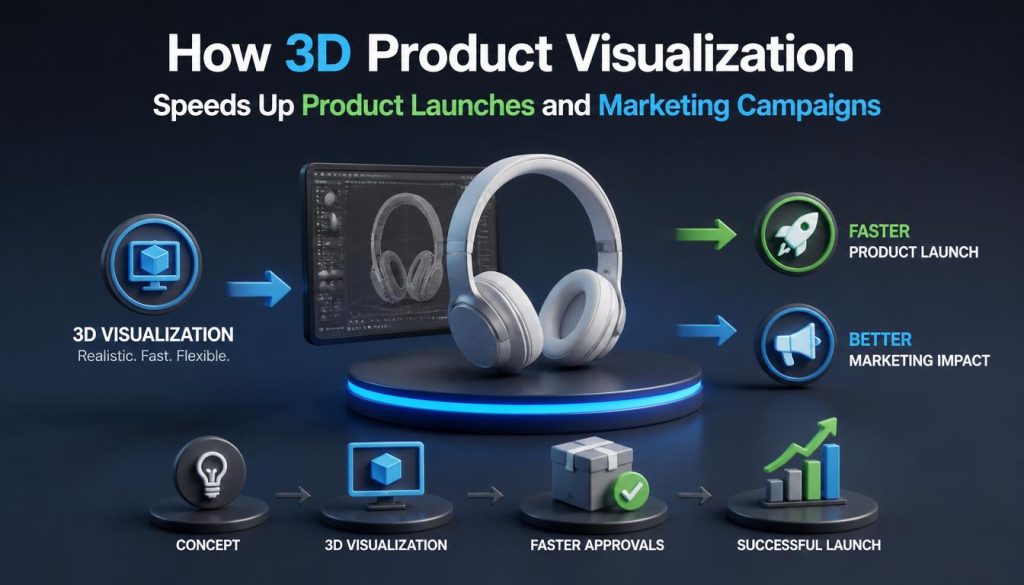
How 3D Product Visualization Speeds Up Product Launches and Marketing Campaigns
Launching a new product requires careful planning, creative marketing, and high-quality visuals that attract customers from the very beginning. Traditional product photography often takes time, requires physical prototypes, and may delay promotional campaigns. 3D product visualization offers a faster and more flexible solution by creating realistic digital images before manufacturing is complete. Businesses can showcase products from every angle, produce marketing materials quickly, and respond to market demands with greater efficiency. As a result, companies can shorten product launch timelines while improving customer engagement across multiple platforms.
Why 3D Product Visualization Is Changing Product Marketing
Modern consumers expect detailed product images before making purchasing decisions. High-quality visuals build trust and help customers understand product features without seeing the item in person. Unlike traditional photography, 3D rendering allows designers to create realistic product images without waiting for physical samples. This makes it possible to begin advertising campaigns earlier, update designs quickly, and produce consistent visuals for websites, social media, online stores, and printed catalogs. Businesses also save time by making design changes digitally instead of organizing repeated photo shoots.
How 3D Product Visualization Speeds Up Product Launches
Using 3D product visualization, businesses can create photorealistic images during the product development stage. Marketing teams receive finished visuals before production begins, allowing promotional campaigns to launch much earlier. Designers can easily modify colors, materials, textures, and product variations without creating new prototypes. This flexibility helps companies respond to customer feedback, prepare sales presentations, and support faster decision-making. The result is a more efficient workflow that reduces delays and improves collaboration between product designers, manufacturers, and marketing teams.
Key Benefits of 3D Product Visualization
Businesses can benefit from 3D rendering in several ways:
- Faster product launch timelines
- Photorealistic product images
- Easy design revisions and updates
- Lower photography and prototype costs
- Consistent branding across marketing channels
- Better customer engagement
- Improved online shopping experience
Supporting More Effective Marketing Campaigns
Successful marketing depends on high-quality visual content that captures attention across multiple platforms. Realistic 3D renders can be used for eCommerce websites, digital advertisements, product catalogs, social media campaigns, presentations, and promotional videos. Since every image is created digitally, businesses can generate multiple product views, close-up details, and lifestyle scenes without additional production costs. This allows marketing teams to create compelling campaigns that maintain consistent branding while reaching customers through different channels.
Improving Customer Confidence Before Purchase
Customers are more likely to purchase products when they clearly understand their appearance and features. Detailed 3D visuals allow shoppers to examine products from different angles, explore finishes, and appreciate design details before making a buying decision. This enhanced product presentation reduces uncertainty, improves customer confidence, and creates a more engaging online shopping experience. Businesses also benefit from fewer misunderstandings because customers receive a more accurate representation of the final product.
Conclusion
Modern product launches depend on speed, flexibility, and strong visual communication. Advanced digital rendering allows businesses to create realistic product presentations earlier in the development process, helping marketing teams launch campaigns faster and more effectively. By investing in professional visualization services, companies can improve customer engagement, strengthen their brand image, and bring new products to market with greater confidence and efficiency.