
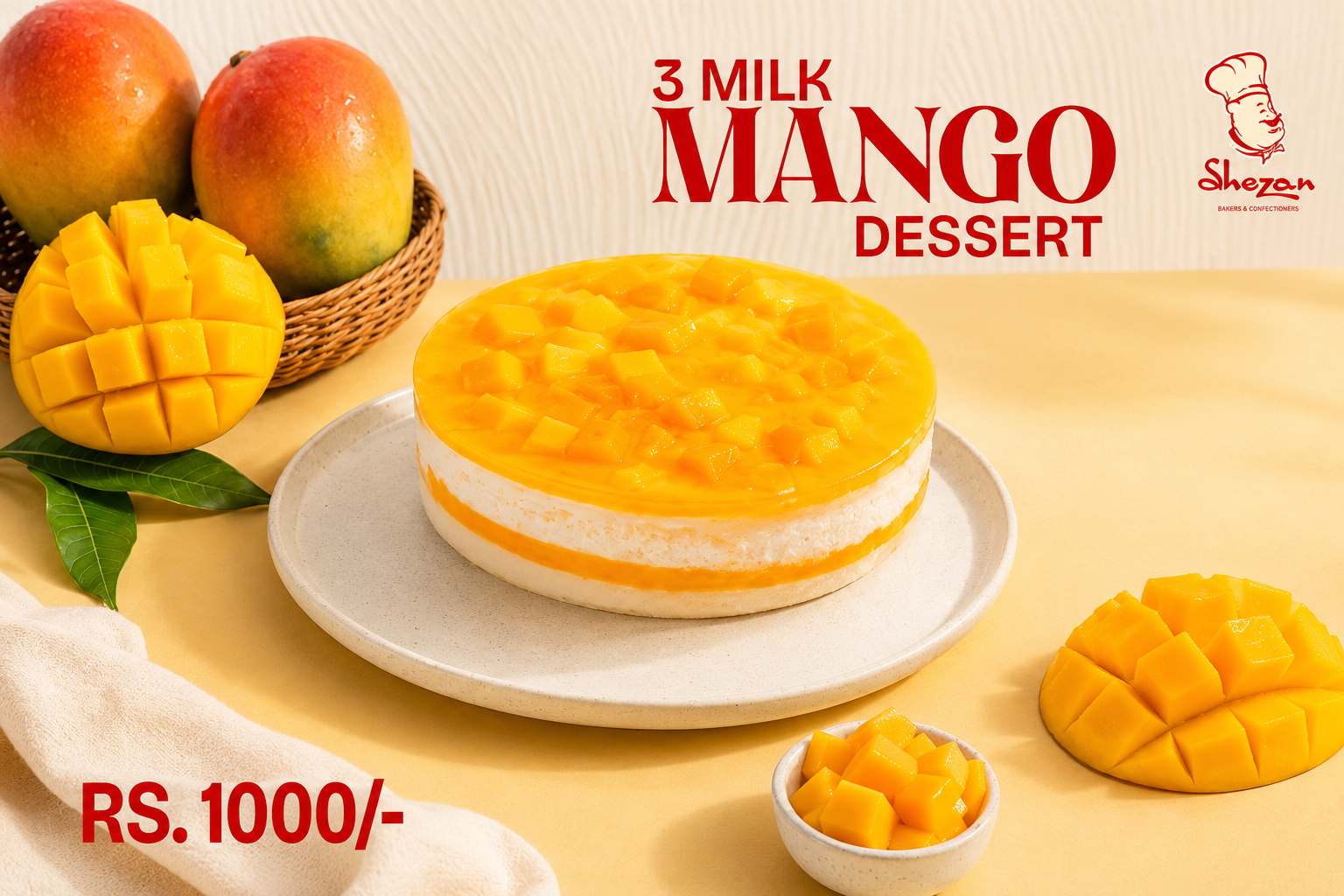
Mango Three Milk Cake at Shezan Bakers and What Defines the Dessert
Key Takeaways
- Mango Three Milk Cake builds on the traditional tres leches base by adding mango puree or fresh mango into the milk soak and topping, changing both flavor and moisture balance.
- Soaking time directly affects texture, since too little time leaves the sponge dry while too much turns it soggy and structurally weak.
- Mango ripeness matters more than quantity, since underripe mango adds tartness that clashes with the sweetness of the milk mixture.
- The three-milk base typically combines evaporated milk, condensed milk, and heavy cream, each contributing different roles in sweetness, richness, and moisture.
- A properly made cake should hold its shape when sliced despite being fully soaked, which distinguishes good execution from an overly wet, collapsing texture.
- Serving temperature affects perceived flavor significantly, since this cake is generally served chilled and loses its intended texture if left at room temperature too long.
Fruit-based variations of classic desserts often succeed or fail based on how well the fruit integrates into the original structure rather than simply sitting on top as decoration. Mango Three Milk Cake takes the traditional tres leches format, a sponge cake soaked in a three-milk mixture, and introduces mango as a core flavor component rather than an afterthought. Done well, this means the mango affects both the soak and the finished texture, not just the visual topping.
Shezan Bakers, which operates across several Lahore locations, includes cake varieties like this within a broader premium cake selection, where fruit-forward desserts sit alongside more traditional options.
What Distinguishes This Cake From Standard Tres Leches
Traditional tres leches cake relies on a sponge base soaked in a mixture of three milks, typically served with a plain cream topping. Adding mango changes this in two ways, either through mango puree blended into the milk soak itself, or through fresh mango pieces layered with the topping, and often both.
This addition shifts the flavor profile from purely rich and creamy toward something with fruit acidity that cuts through the sweetness, which changes how the dessert is perceived even though the base technique remains largely the same.
Why Fruit Integration Matters
Mango that is only placed as garnish contributes flavor solely to the top layer, leaving the cake’s interior unchanged from a standard tres leches. Mango incorporated into the soak itself affects the sponge more evenly, meaning each bite carries the fruit flavor rather than concentrating it at the surface.
The Role of Milk Ratios in Texture
The three-milk mixture usually combines evaporated milk, sweetened condensed milk, and heavy cream, each serving a distinct purpose. Evaporated milk provides the primary liquid volume without adding excessive sweetness, condensed milk supplies both sweetness and thickness, and heavy cream adds richness that keeps the soaked sponge from becoming watery.
Getting this ratio wrong affects the final texture directly. Too much condensed milk makes the cake overly sweet and heavy, while too little leaves the sponge under-flavored despite being fully soaked.
Soaking Time and Its Effect on Structure
Soaking time is one of the most technical aspects of preparing this cake. The sponge needs enough time to absorb the milk mixture fully, but oversoaking breaks down the cake’s structure, leaving it too fragile to slice cleanly. Bakers typically judge readiness by how the cake holds together when lightly pressed, rather than relying strictly on a fixed time.
Mango puree added to the soak can also affect absorption slightly, since fruit puree has a different consistency than milk alone, which means recipes need adjustment when mango is introduced into the mixture rather than treated purely as topping.
Signs of Improper Soaking
A cake that collapses or falls apart when sliced usually indicates oversoaking or too thin a sponge base to begin with. A cake that tastes dry in the center despite a wet surface suggests the soak did not have enough time to penetrate fully before serving.
Expert Insights
Bakers working with fruit-infused milk cakes generally test mango ripeness carefully before use, since underripe mango introduces tartness that unbalances the sweetness of the milk soak, while overripe mango can make the puree too watery and affect the soak’s consistency.
Sponge density also receives close attention during preparation, since a lighter sponge absorbs milk faster but risks becoming overly soft, while a denser sponge holds structure better but requires longer soaking time to achieve full flavor absorption. Balancing these two factors is typically where experience matters most in producing a consistent result.
Industry Best Practices
Bakeries preparing milk-based cakes with fruit additions generally follow specific handling practices. Mango puree is often prepared fresh close to preparation time rather than stored for extended periods, since fruit puree can lose flavor intensity and develop off-notes if held too long.
Refrigeration is essential throughout preparation and storage, since the dairy-heavy soak makes this cake more perishable than drier cake varieties. Consistent portioning also matters, since slices need to hold their shape when served despite the cake’s saturated texture.
Common Mistakes
A frequent preparation mistake is using mango that is not fully ripe, which introduces unwanted tartness that competes with the milk mixture’s sweetness rather than complementing it. Another common issue is oversoaking the sponge in an attempt to maximize flavor, which instead breaks down the cake’s ability to hold together on a plate.
On the ordering and storage side, a common mistake is leaving this cake at room temperature for extended periods before serving, which affects both food safety given its dairy content and the intended chilled texture that defines the dessert.
Buying Considerations
When ordering Mango Three Milk Cake, confirming how the mango is incorporated, whether blended into the soak, used as topping, or both, can help set expectations around flavor intensity. Checking storage and delivery handling matters given the cake’s dairy-heavy composition, since proper refrigeration during transport affects both safety and texture on arrival.
For those ordering ahead of an event, confirming serving size against guest count helps avoid running short, since this cake’s rich, saturated nature often means smaller slices satisfy compared to drier cake varieties.
Read More
Readers interested in how fruit purees affect other soaked or moist cake preparations may also find our article on flavor-infused premium cakes useful.
Final Thoughts
Shezan Bakers includes fruit-forward desserts like this within a cake selection that spans premium, customized, and everyday options across its Lahore locations. Understanding what separates a well-made Mango Three Milk Cake from an average one, from mango ripeness to soaking time and milk ratio, gives customers a clearer basis for judging quality beyond appearance alone. For anyone drawn to fruit variations of classic desserts, these preparation details explain much of what makes the difference between a forgettable slice and one worth remembering.
FAQs
What is the difference between Mango Three Milk Cake and regular tres leches?
Mango Three Milk Cake incorporates mango puree or fresh mango into the soak or topping, adding fruit flavor absent from traditional tres leches.
Why does Mango Three Milk Cake sometimes taste too sweet?
Excess condensed milk in the three-milk mixture without enough mango tartness to balance it can make the cake overly sweet.
How should Mango Three Milk Cake be stored?
It should be kept refrigerated at all times due to its dairy-heavy soak, which affects both safety and texture.
Can I order Mango Three Milk Cake from Shezan Bakers in Lahore?
Yes, Shezan Bakers offers cake varieties like this across its multiple Lahore locations as part of its premium cake range.
Why does the texture of Mango Three Milk Cake vary between bakeries?
Differences in soaking time, milk ratios, and mango ripeness all affect the final texture, leading to noticeable variation between preparations.